
Wine for Steak Dinner: Find a Match for Your Cut

The best wine for steak dinner isn’t always the boldest bottle. Match it to the cut: choose lighter, brighter wines for lean steak and fuller reds with more tannin for rich, fatty cuts. Cabernet Sauvignon suits marbled ribeye, while Pinot Noir can complement tender filet, especially with mushrooms or herbs.
That principle makes choosing easier, but sauce, seasoning and cooking method can shift the match. Tannin, acidity, fruit and oak all shape a pairing. Use them to choose a bottle for ribeye, filet, strip, porterhouse or skirt steak, from classic combinations to less expected options such as peppery Syrah or a fresh, high-acid red. The aim is to suit both the cut and the flavours on the plate, not to treat steak and wine as a one-pairing-fits-all affair.
Table of Contents
1. What’s the best wine for steak?
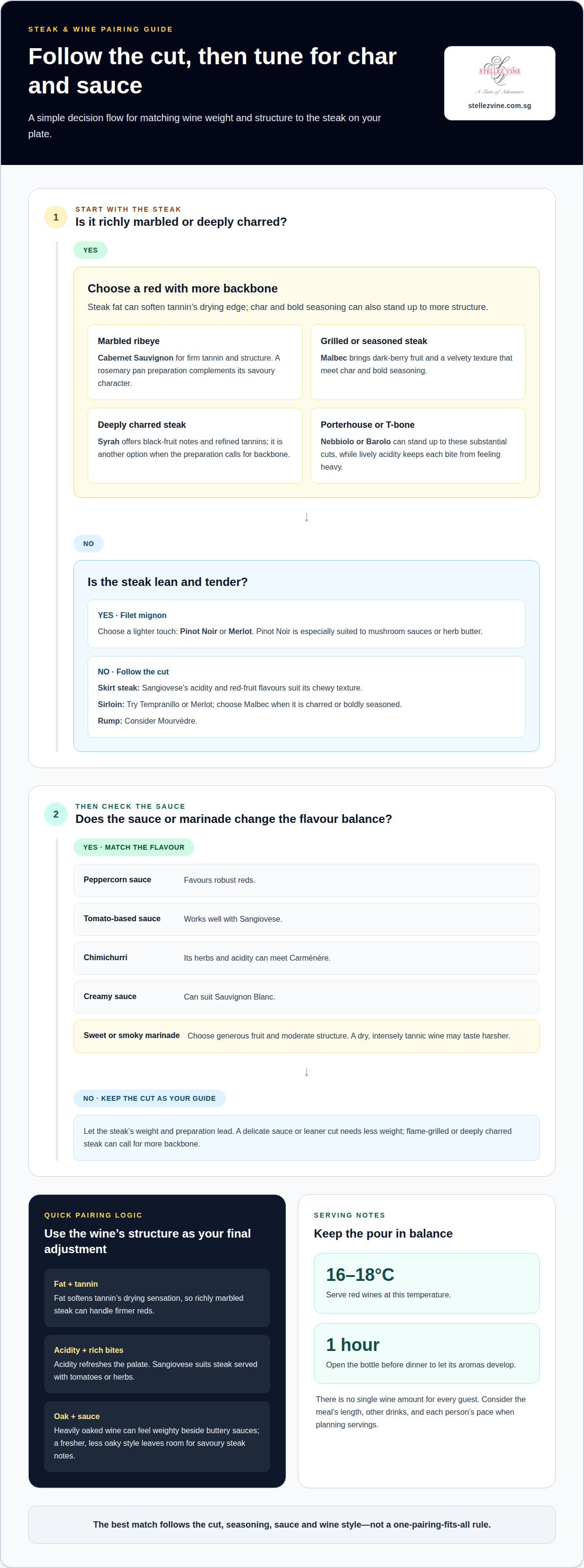
The best wine for steak dinner starts with the cut and its richness. Cabernet Sauvignon suits marbled ribeye, while Malbec brings dark-berry fruit and velvety texture to grilled or seasoned steak. Neither wins universally: choose Cabernet for firm tannin and structure, Malbec for plush fruit and char. A rosemary pan preparation also complements Cabernet Sauvignon’s savoury character.
For porterhouse and T-bone, try Nebbiolo or Barolo. Their structure stands up to these substantial cuts, while lively acidity keeps each bite from feeling heavy. Syrah offers another option, with black-fruit notes and refined tannins. For lean filet mignon, choose Merlot or a lighter Pinot Noir. Pinot Noir is especially suited to mushroom sauces or herb butter.
Preparation changes the pairing. Flame-grilled or deeply charred steak can call for a wine with more backbone, such as Syrah or Malbec. A delicate sauce or leaner cut needs less weight. Match sirloin with Tempranillo or Merlot, and consider Mourvèdre for rump. For skirt steak, Sangiovese’s acidity and red-fruit flavours suit its chewy texture.
Sauces and marinades matter as much as the cut. Peppercorn sauce favours robust reds, while tomato-based sauces work well with Sangiovese. Chimichurri’s herbs and acidity can meet Carménère, and creamy sauces can suit Sauvignon Blanc. A sweet or smoky marinade may make a dry, intensely tannic wine taste harsher, so choose generous fruit and moderate structure.
Alcohol duties and purchase or service rules in Singapore govern wine transactions, but they don’t change the food pairing. For a value-conscious dinner, consider Merlot, Malbec or South African reds. Bottle costs vary by origin, producer, vintage and retailer, so compare wines in similar styles. White-wine drinkers can try Chardonnay, while Cerasuolo d’Abruzzo is one rosé option.
Serve red wines at 16-18°C, and open the bottle one hour before dinner to let its aromas develop. There’s no single wine amount that suits every guest: consider the meal’s length, other drinks, and each person’s pace when planning servings.
2. How tannin, acidity, fruit and oak complement steak
Tannins create a drying, grippy sensation, especially in robust red wines. Steak fat softens that sensation, making structured wines feel smoother alongside a rich bite. Fatty ribeye can handle firm tannins from Cabernet Sauvignon, while lean filet mignon offers less fat to buffer them. With a lean cut, choose a softer-textured wine, such as Pinot Noir, rather than an aggressively tannic red.
Salt and fat shift the balance further. Salted steak can make wine taste fruitier and less bitter, while fat coats the palate and reduces tannin’s drying edge. Try a well-seasoned strip steak with a structured Bordeaux blend: the meat’s richness gives the wine’s grip something to meet. For a leaner cut with little seasoning, softer Merlot keeps the pairing subtle rather than overwhelming.
Acidity works differently: it refreshes the palate between rich mouthfuls. Sangiovese, with its bright acidity and red-fruit character, suits steak served with tomatoes or herbs. Zinfandel offers fuller fruit for charred meat, although a sweeter marinade can make ripe fruit seem more pronounced. Match the sauce as well as the steak, since pepper, balsamic or tomato changes the overall flavour balance.
Oak shapes texture and flavour, adding impressions of toast, spice, or vanilla. A heavily oaked wine can feel weighty beside buttery sauces, while a fresher, less oaky style leaves room for the steak’s savoury notes. Taste the wine with a small bite before serving the full meal. If you’re exploring regional styles, South African wines offer another direction to consider. Let the cut, seasoning, sauce, and wine’s structure guide the final choice.
3. Malbec with grilled and richly marbled cuts
Malbec brings dark-berry fruit and a velvety texture to grilled steak. Its ripe fruit complements smoky char, while its structure gives the wine presence beside richly marbled beef. Choose it for ribeye cooked over flame, especially when the surface develops a savoury crust. The steak’s fat softens the wine’s tannins, keeping the pairing balanced rather than austere.
Seasoning makes Malbec especially useful. With a pepper rub, garlic marinade or smoky spice blend, its fruit can meet bold flavours without disappearing. For a sweet marinade, avoid over-charring the meat: heavy sweetness and deep scorch can make the wine taste less fresh. Let the steak’s seasoning guide your choice, then taste a small bite with the wine before serving.
Flank and skirt steak have a fibrous texture and pronounced beef flavour, so Malbec’s berry notes and supple weight make a strong match. Grill either cut, slice it across the grain, and serve with chimichurri or a pepper-forward rub. The herbs add lift, while Malbec’s fruit complements the meat’s savoury intensity. For sirloin, choose Malbec when the preparation is charred or boldly seasoned; a gentler preparation may suit a lighter red better.
Malbec is versatile, but it isn’t the answer to every steak. Grilled ribeye can welcome its generous fruit, while delicate filet mignon may lose its nuance beside a full-bodied pour. For leaner steak or subtle sauces, consider lighter Pinot Noir. If the meal features barbecue flavours, Australian Shiraz offers another smoky, fruit-led direction. Match the wine’s weight to the meat, then adjust for char, marinade and sauce. This keeps the pairing intentional, whether the steak is flame-grilled, pan-seared or served with a vivid herb dressing.
4. Matching wine to ribeye, filet, strip, porterhouse and skirt steak
For ribeye, start with its marbling and preparation. Cabernet Sauvignon, Malbec, Syrah and Nebbiolo have enough structure for its richness. Flame-grilled ribeye also welcomes Sonoma or Napa Valley Zinfandel, whose ripe fruit meets the smoky crust. If butter-basting softens the char, choose a wine with freshness rather than extra weight.
Filet is lean and tender, so an imposing red can overwhelm its delicate flavour. Pinot Noir or Beaujolais keeps the pairing lighter, especially with herb butter or mushrooms. A Merlot-based blend offers a rounder alternative. For strip steak, compare Cabernet Sauvignon, Malbec or a Bordeaux blend; Blaufränkisch brings a less familiar, lively option.
Porterhouse combines two textures in one cut, so choose a wine for the richer bite and the seasoning. Nebbiolo or Barolo brings firm structure and acidity, while Syrah offers hearty black-fruit character. For a large Basque-style rib steak, Blanc de Noirs sparkling wine, including Cava or Champagne, creates a contrasting pairing.
Skirt steak is fibrous and boldly flavoured. Malbec’s berry character complements its grilled surface, while Sangiovese adds bright acidity and red-fruit notes. If the steak comes with chimichurri, choose a wine that can meet its herbs and seasoning; a heavily charred version needs more backbone than a simply seared cut.
Use this sequence: identify the cut, note its fat and char, then account for butter, herbs, or marinade. That gives you a practical shortlist instead of one rigid rule. For another bottle direction, explore wines for your steak pairing and compare how each style suits the cut and preparation.
Stellez Vine Singapore: South African Wines
Stellez Vine Singapore offers South African wines for readers looking to explore a different regional direction for steak night. Use the cut and preparation as your guide: richly marbled steak can call for a more structured red, while leaner beef may suit a lighter style. Compare the wine’s weight and fruit with the seasoning and sauce before choosing what to pour.
For dinners at home, Stellez Vine Singapore also offers Kadeka wine chillers, Eurocave wine fridges and Liebherr wine cabinets. A dedicated wine fridge or cabinet gives bottles a place between occasions, so you can choose a wine to suit the meal rather than making a storage decision around one dinner.
Explore South African Wines and choose a bottle direction that fits your next steak dinner. Visit stellezvine.com.sg or contact Stellez Vine Singapore to explore the selection.
Make Your Next Steak Dinner Your Own
Choosing the best wine for a steak dinner can be part of the pleasure of hosting, not just a final decision at the table. Think about the mood you want to create: familiar and comforting, or a chance to discover a less expected bottle. Your guests’ preferences and the character of the occasion can shape the choice as much as the menu.
Before you shop for your next dinner, make a small shortlist. Note the styles your guests enjoy, then choose a bottle that gives the meal a personal touch. Keep track of what everyone liked, too. Those details make future dinners easier to plan and help you develop a confident sense of your own taste.
When you’re ready to explore a bottle for your table, contact Stellez Vine Singapore and continue discovering wines that make the occasion feel considered. Your next memorable dinner starts with a choice that feels right for you and your guests.
Frequently Asked Questions
What’s the best wine for steak?
Choose a dry red with enough body for the steak and its preparation. If the meal features both lean filet and marbled ribeye, a balanced red can avoid overshadowing the delicate cut while still working with the richer one. Let the seasoning guide your final choice: a pepper-heavy crust calls for more structure than a delicate herb finish.
Which red wine styles pair best with steak?
Cabernet Sauvignon, Malbec, Merlot, Pinot Noir and Syrah all offer useful pairing options, but they suit different menus. If you’re serving several cuts, choose a bottle to complement the most richly flavoured steak, then consider a lighter alternative for guests who prefer softer reds. A wine’s fruit, tannin and acidity help refine the choice beyond grape name alone.
What wine pairs best with different steak cuts, such as ribeye, sirloin, and filet mignon?
For ribeye, look for a structured red that can meet its richness; for sirloin, consider a fruit-forward style that won’t dominate the beef. Filet mignon’s tenderness calls for a gentler match, especially when served simply. If you’re serving more than one cut, plan around the steak with the strongest flavour, then let sauces and seasoning shape the final choice.
What are good wine pairings for steak sauces and seasonings?
Match the sauce as carefully as the meat. Hollandaise or Béarnaise can work with white Burgundy or oaked Chardonnay, while steak au poivre has options in Touriga Nacional or young ruby Port. Olive tapenade and puttanesca suit Syrah. For simple seasoning, taste a small bite with the wine first: pepper, herbs and sauce can shift the overall balance.
Where can I buy good steak-pairing wines in Singapore?
Browse Stellez Vine Singapore’s online wine selection, which includes South African wines and bottles from other regions to consider for a steak menu. Start with the cut and sauce, then look for a style that suits the meal. Choosing by the overall flavour profile, not grape name alone, helps narrow the options.
What are affordable steak wines available in Singapore, and what do they cost?
Merlot, Malbec and South African reds are suggested as value-conscious options in Singapore. Bottle costs vary by origin, producer, vintage and retailer, so compare wines in similar styles.



Comments