
Universal wine glasses compared: Which should you buy

The most versatile wine glass isn’t automatically the best choice for every drinker. Choose a universal glass if you want one shape for casual pours and a range of wines; a specialised glass may suit you better if you prioritise a particular tasting style. This universal wine glass review compares what matters before you decide.
It’s easy to focus on bowl shape alone, but a glass should also feel comfortable in your hand, suit the way you drink wine and fit your cupboard. Capacity and material matter, too: they affect its size, feel and everyday practicality.
We compare universal glasses for casual use and tasting, looking at shape, handling, material and capacity. Use the decision guide to find the type that suits your habits, whether you want a dependable everyday glass or a more refined option for attentive tasting.
Table of Contents
Glass suitability for casual use, tasting and different wines
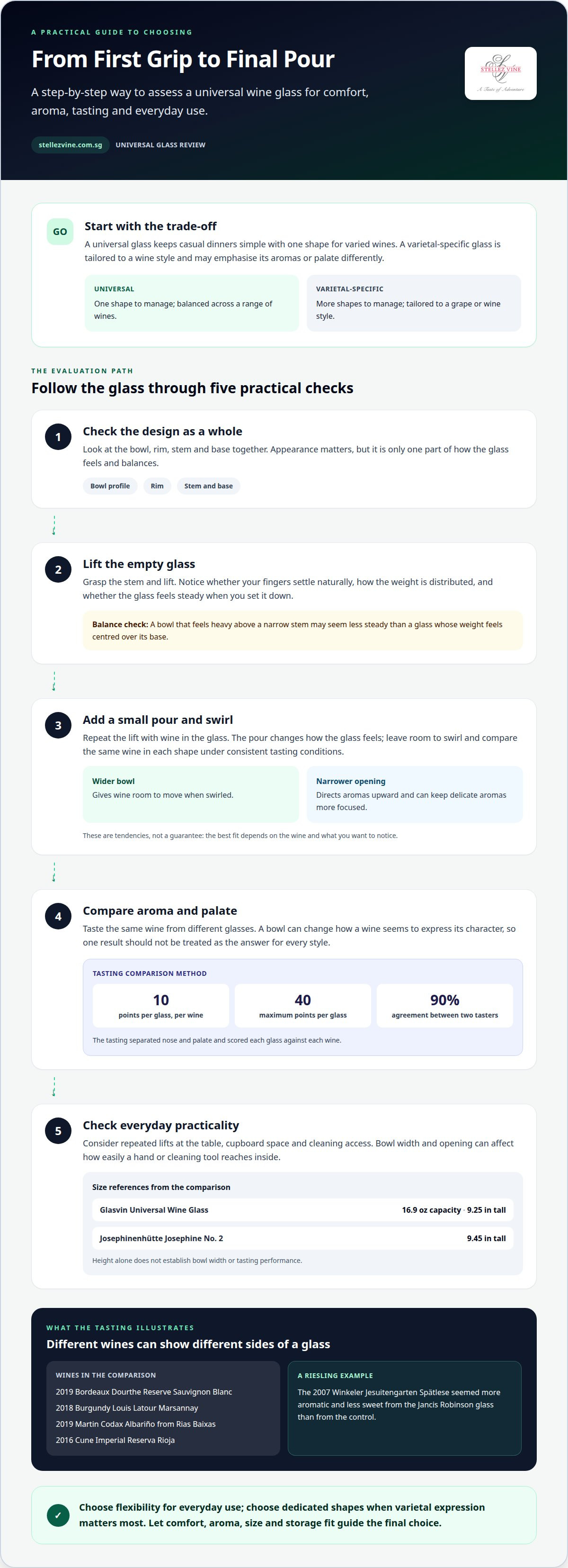
A universal glass keeps casual dinners simple, offering one shape for exploring different wines. The trade-off is less precise varietal matching: a dedicated bowl can present a particular wine differently.
Casual Use Versus Tasting
For everyday drinking, one glass style is easy to set out, use throughout a meal and store as a matching set. In focused tasting, the bowl becomes part of the comparison: aromas and flavours can seem different from one glass to another. A delicate sparkling wine and a structured red may not show their best in the same shape, so convenience and tasting focus can pull in different directions.
Universal Versus Varietal-Specific Glasses
A universal glass balances a range of wines, while a varietal-specific glass is shaped around a grape or style. A Riedel glass designed for a particular variety represents that tailored approach. The practical trade-off is simple: one universal shape means fewer glass types to manage, but it may not emphasise each wine’s aromas or palate as a dedicated bowl can.
Wine-by-wine tasting comparisons show why one shape can’t be treated as a neutral vessel. The tested lineup included the 2019 Bordeaux Dourthe Reserve Sauvignon Blanc, the 2018 Burgundy Louis Latour Marsannay, the 2019 Martin Codax Albariño from Rias Baixas, and the 2016 Cune Imperial Reserva Rioja. Rieslings also shifted in character: a 2007 Winkeler Jesuitengarten Spätlese seemed more aromatic and less sweet from the Jancis Robinson glass than from the control.
The tasting method separated nose and palate, scoring each glass out of 10 against each wine; the maximum was 40 points per glass. Two tasters agreed on 90 per cent of their findings. This gives the comparison a clear framework, but the different impressions also show why a single result cannot describe every wine style.
Choose a universal glass for flexibility; favour dedicated shapes when varietal expression matters most.
Balance and comfort when holding wine glasses
Comfort depends on more than an elegant silhouette. In a universal wine glass review, appearance, feel and balance each deserve consideration because they affect how naturally a glass sits in your hand.
Appearance and Feel
A slender stem and clear bowl create a refined look, while the way the glass feels becomes clear once you lift it. During a tasting, the assessment scored appearance, feel and balance out of a maximum of 10 points for each glass. That score captures more than visual appeal: rim, stem and base proportions contribute to the overall impression. Compare those details as a complete design, not as isolated features.
Weight and Balance
Weight influences how much effort it takes to hold a glass, but its distribution matters just as much. A bowl that feels heavy above a narrow stem may seem less steady than a glass whose weight feels centred over its base. How easily you can lift, turn and set down the glass affects comfort over a meal. During a tasting, small differences become noticeable as you raise the glass repeatedly.
Use the same simple sequence to compare options: grasp the stem, lift the empty glass, then hold it at a comfortable tasting height. Notice whether your fingers settle naturally and whether the base stays steady when you set it down. Repeat with a small pour, since the wine changes the glass’s feel and balance. An elegant shape should enhance the experience without making everyday handling awkward.
On display: Compare the bowl, stem and base as one design.
In hand: Notice grip, weight and steadiness during a lift.
At the table: Consider how comfort holds up through repeated pours.
Weigh comfort as carefully as appearance: even an attractive glass may not suit you if it feels awkward to lift or steady.
How bowl shape and size affect wine
Popular universal options differ in dimensions: the Glasvin Universal Wine Glass holds 16.9 ounces and stands 9.25 inches tall. The Josephinenhütte Josephine No. 2 Universal Wine Glass stands 9.45 inches tall, so size and handling deserve attention alongside shape.
Shape and Aroma Delivery
A bowl’s width and opening influence how aromas reach your nose. A wider bowl gives wine room to move when swirled, while a narrower opening directs aromas upward. Neither shape makes every wine smell excellent; the best fit depends on the wine and what you want to notice. Compare how the wine smells in each bowl before deciding which design suits your tasting habits.
Shape and Wine Character
Shape can change how a wine seems to express its character. A broad bowl gives red wine more room to open as you swirl, while a narrower bowl can keep delicate aromas more focused. These are tendencies, not a guarantee that one glass will transform every bottle. To compare, taste the same wine in each glass and keep the pour and tasting conditions consistent.
Popular Glasses by Shape and Performance
The Glasvin’s 16.9-ounce capacity offers a reference for generous bowl size; its height is 9.25 inches. The Josephine No. 2 is taller at 9.45 inches, but height alone doesn’t establish bowl width or tasting performance. Compare each glass’s opening, bowl profile and capacity, then consider whether its proportions feel practical for your table and storage space.
For a simple comparison, inspect each rim, swirl the same wine, then assess how clearly its aromas emerge. Pour about a quarter of a stemmed glass, leaving room to swirl. After tasting, consider cleaning: bowl width and opening can affect how easily your hand or a cleaning tool reaches inside. Choose a shape that balances aroma access with practical care.
Universal wine glass materials and capacities
Material affects a wine glass’s feel and care needs. Crystal can create a fine, elegant profile, while sturdier glass may suit regular table use better. Compare the rim, stem and bowl together; material alone doesn’t determine whether a glass feels comfortable or practical for red wines.
Capacity matters for serving as well as storage. A standard bottle contains about five glasses at a standard serving size, so choose a bowl that leaves room for the wine to move without requiring a full pour. A larger bowl can provide more room, but consider cupboard height and how easily you can handle the glass.
What is the typical price of a universal wine glass in Singapore dollars? There isn’t one typical S$ price across all universal glasses. Material, craftsmanship and design affect the cost, so compare glasses with similar construction rather than treating capacity as the sole measure of value.
Where can you buy universal wine glasses in Singapore, and what about warranties or returns? Choose a Singapore retailer that sells the style you want, and read its written warranty and return terms before buying. Policies vary by seller, so don’t assume they are the same everywhere.
Durability depends on construction and handling, while dishwasher safety depends on the glass’s care instructions. Delicate crystal is best washed by hand rather than placed in a dishwasher without a device that holds glasses stable. Support the bowl while washing and avoid knocking stems against other dishes.
For a practical comparison, consider material, capacity, storage fit and cleaning needs together. A Gabriel-style universal glass may appeal for its all-purpose design, but its care instructions still matter. Choose a glass you can use comfortably and maintain consistently, rather than simply choosing the largest bowl or most refined finish.
Explore glassware options to find a style that fits your table and serving habits.
Stellez Vine Singapore: Glassware
Stellez Vine Singapore offers glassware for readers choosing between an adaptable everyday glass and a more refined tasting option. Explore its selection when you’re ready to match glassware with the wines you enjoy and the way you serve them.
Pair your choice with South African wines to explore how different pours present in the glass. For a complete home setup, Kadeka Wine Chillers and Eurocave Wine Fridges provide storage options alongside glassware. The right combination depends on whether your priority is serving, tasting or storing your collection.
Use the comparisons in this guide to decide which bowl shape, material and capacity best suit your table. Then contact Stellez Vine Singapore to discuss your glassware choice.
Choose a Glass That Fits Your Next Pour
A universal wine glass review can narrow the options, but your next step is to picture how you’ll use the glass at home. Think about the wines you reach for, the occasions when you pour them and how you want the glass to feel in daily use. Let that routine guide your choice instead of chasing a single perfect shape.
Then make the selection part of a wider appreciation of wine. A considered glass can bring intention to an ordinary meal or a bottle saved for a special evening. If you’re ready to explore your options, begin a conversation with Stellez Vine Singapore. Take what you’ve learned, choose for the way you enjoy wine, and look forward to your next pour.
Frequently Asked Questions
Which Glass to Buy?
Choose a universal glass if you want one versatile option for varied bottles and everyday meals. If one grape or wine style dominates at home, a glass tailored to that preference may make more sense. Picture a typical dinner: if the same glass would suit the white served before the main course and the red served with it, versatility is likely your priority.
What is a universal wine glass and what wines is it designed for?
A universal wine glass is designed as an all-purpose shape for tasting and serving different wine styles, rather than for one specific grape. It can work across reds, whites and rosé, making it a practical choice when your wine selection changes. For example, it gives you one consistent glass for a crisp white one evening and a lighter red another.
Are universal wine glasses suitable for red, white, sparkling, and rosé wines?
Yes, a universal glass can serve red, white, sparkling and rosé wines, though it isn’t tailored to every style. For a mixed dinner, it simplifies the table setting and lets you move between pours without changing glasses. If a particular wine is the focus, such as sparkling wine at a celebration, a specialised shape may offer a more deliberate tasting experience.
Universal wine glass reviews: Riedel Performance vs Zalto Denk'Art vs Gabriel-Glas
A Riedel glass designed for a particular variety is tailored to that wine style, while a Gabriel-style universal glass is intended for all-purpose use. A universal shape is simpler to manage; a dedicated bowl may present a wine’s aromas and palate differently.


Comments