
Storing Opened Wine in a Wine Fridge: What to Expect

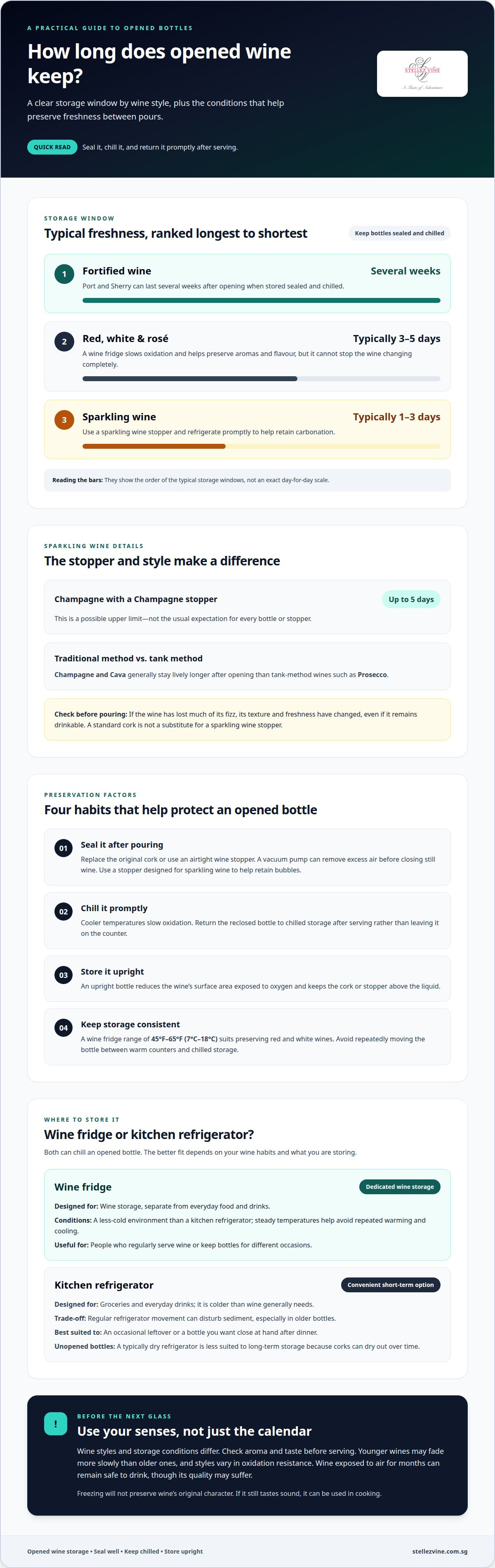
Your wine fridge still has a role after the cork comes out. Storing opened wine in a wine fridge slows oxidation, and opened red, white and rosé wines typically keep for 3 to 5 days when chilled. It won’t preserve every bottle’s freshness indefinitely, but it gives you a practical way to enjoy the rest later.
It’s natural to reach for the kitchen fridge when you want a bottle cool and ready to pour. But a wine fridge is designed for wine storage, while a kitchen fridge is colder than wine generally needs. Here, you’ll learn how the two compare, how to help an opened bottle retain its character, and how long sparkling wine may keep when properly sealed. The bottle’s style and storage conditions matter, so you can choose where to keep your next unfinished pour.
Table of Contents
Can I Store My Opened Bottle of Wine in a Wine Fridge?
Yes. Storing opened wine in a wine fridge slows oxidation and helps preserve its aromas and flavour. Seal the bottle after pouring and chill it rather than leaving it at room temperature.
Cooler Temperatures and Slower Oxidation
Cooler temperatures slow oxidation, the process that changes wine after air reaches it. Steady temperatures also avoid repeated warming and cooling, helping keep an opened bottle’s condition consistent. In Singapore’s warm climate, a wine fridge is a practical place for a reclosed bottle between pours. Return it promptly after serving instead of leaving it on the counter.
Wine Fridge Temperature Range
A wine fridge temperature range of 45°F to 65°F (7°C to 18°C) suits preserving red and white wines. This offers a less-cold environment than a kitchen refrigerator. Consistency matters, so avoid moving a bottle between warm counters and chilled storage. Red wine may taste muted straight from the fridge; let it warm before serving so its aromas can emerge.
Bottle Position During Storage
Store an opened bottle upright to reduce the wine’s surface area exposed to oxygen. This also makes the bottle easier to handle without disturbing its contents. Reseal it with the original cork or an airtight wine stopper, then place it upright in the fridge. For example, keep a reclosed, half-finished red standing rather than laying it on its side.
For storing opened wine in a wine fridge, expect red, white and rosé to last typically 3 to 5 days; fortified wines such as Port and Sherry can last several weeks. Younger wines may fade more slowly than older ones, and styles differ in oxidation resistance. Check aroma and taste before serving. Wine exposed to air for months can remain safe to drink, though quality may suffer. Freezing isn’t a way to preserve its original character; wine that still tastes sound can be used in cooking.
Wine fridges versus kitchen refrigerators
Both appliances can chill an opened bottle, but they serve different everyday needs. A kitchen refrigerator stores groceries and drinks, while a wine fridge is dedicated to wine. Choose based on your habits: an occasional leftover can go in the kitchen fridge, while a wine collection may benefit from its own storage space.
Vibration is another difference to consider. Movement from a regular refrigerator can disturb sediment, particularly in older bottles. If you’re keeping a mature red, a quieter, dedicated location can help the sediment settle. This matters most when you plan to pour carefully and want to avoid mixing the deposit back into the wine.
Kitchen refrigerators are also typically dry, which can cause corks to dry out over time. That makes them less suited to long-term storage of unopened bottles. For an opened bottle, their main practical advantage is convenience: the refrigerator is close at hand after dinner. A wine fridge gives bottles a dedicated place, separate from everyday food storage.
Consider your routine as well as the appliance. If you open wine only occasionally, the kitchen refrigerator is a straightforward short-term option. If you regularly serve wine at home or keep bottles for different occasions, separating wine from groceries can make storage more orderly. In either case, reseal an opened bottle after pouring.
A dedicated wine fridge is not essential for every household, but it offers a distinct storage space for people who keep wine close at hand. Comparing wine storage options can help you consider which setup best suits your bottles and home routine.
Opened sparkling wine storage duration
Opened sparkling wine typically keeps for 1 to 3 days in a wine fridge when sealed with a sparkling wine stopper. Yes, refrigerate it after opening: the cooler environment slows changes, while the stopper helps retain carbonation. For the best chance of lively bubbles, reseal the bottle promptly after pouring rather than leaving it open between glasses.
The style of sparkling wine also affects how long it stays lively. Traditional-method wines, including Champagne and Cava, last longer after opening than tank-method wines such as Prosecco. A Champagne stopper can keep sparkling wine bubbly for up to five days. Treat this as a possible upper limit, not the usual expectation for every bottle or stopper.
After serving, fit a sparkling wine stopper securely and place the bottle in the wine fridge. Keep it upright, where it is less likely to spill when moved or opened. For example, a half-finished bottle of Prosecco should be sealed and chilled promptly, then enjoyed within the 1-to-3-day window. A standard cork is not a substitute for a stopper designed for sparkling wine.
Check the wine before pouring another glass. If it has lost much of its fizz, its texture and freshness will have changed, even if it remains drinkable. Traditional-method Champagne may retain bubbles longer than tank-method Prosecco, but neither style stays unchanged indefinitely after opening. For the most expressive sparkle, plan to finish the bottle sooner and use a stopper along with chilled storage. The distinction is clear: opened wine can last several days, but sparkling wine’s enjoyable fizz has a shorter window.
Why a wine fridge can help preserve opened wine
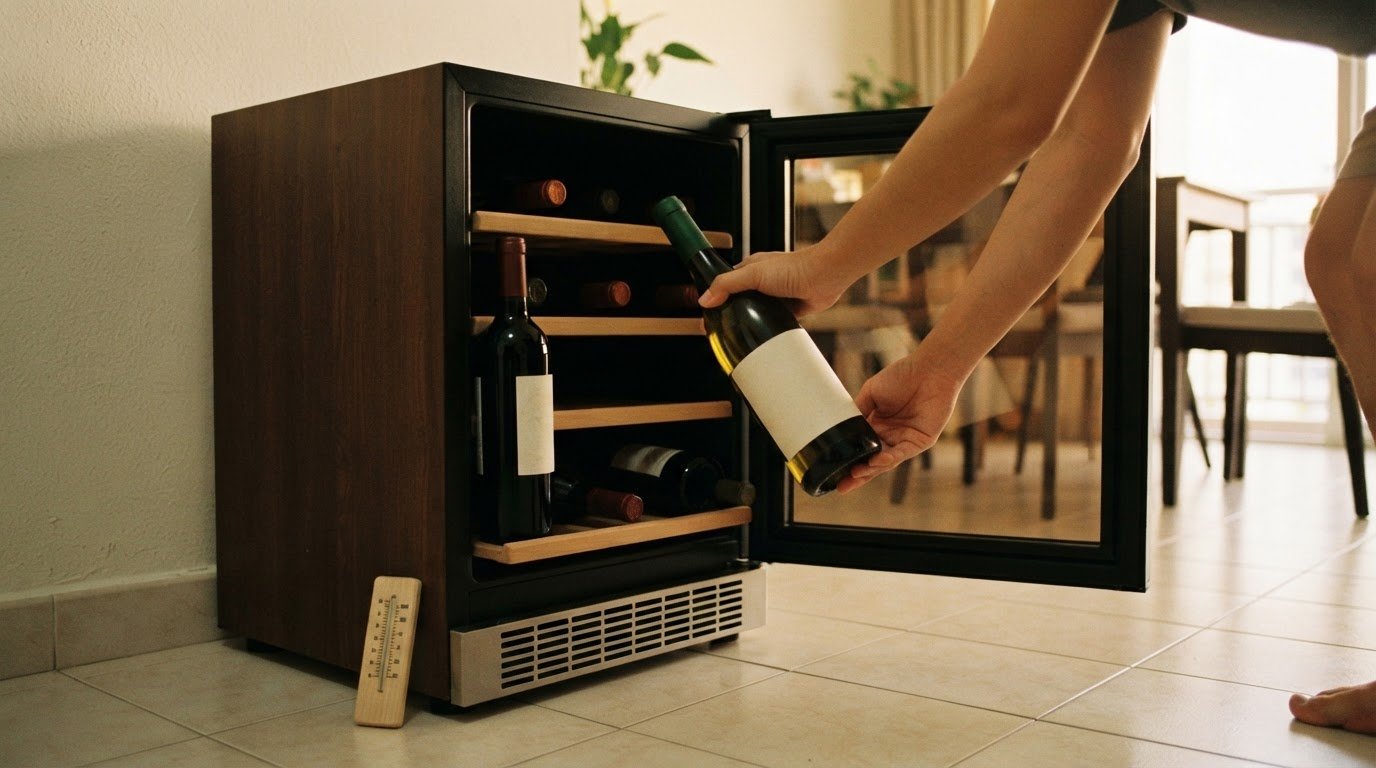
A wine fridge helps manage two conditions that affect an opened bottle: temperature and air exposure. Cooler, steady storage slows oxidation, while a suitable closure limits oxygen entering the bottle. Together, these measures help preserve a wine’s aromas and flavour between pours, though they can’t stop its character from changing completely.
Choose a closure to suit the wine. For still wine, replace the original cork or use an airtight wine stopper as soon as you finish pouring. A vacuum pump can remove excess air before you close the bottle. For sparkling wine, use a sparkling wine stopper to help retain its bubbles. Each closure works alongside chilling, not instead of it.
Position matters, too. Store a reclosed bottle upright to reduce the wine’s surface area exposed to oxygen. This also keeps the stopper or cork above the liquid. For example, after pouring a glass of white wine, reseal the bottle and return it upright to the fridge rather than leaving it open on the counter.
A wine fridge’s controlled storage environment can also help protect corks. Wine fridges typically maintain humidity levels of 50% to 70%. By contrast, regular refrigerators tend to be dry, which can cause corks to dry out over time. This matters most for bottles kept longer, while prompt resealing remains central for opened wine.
Think of the fridge as one part of a simple preservation routine: limit air, keep conditions cool and consistent, and avoid unnecessary time at room temperature. A younger wine may fade more slowly than an older one, and some styles resist oxidation better. Apply the same storage care, but judge each bottle by its aroma and taste before serving.
For a dedicated wine-storage setup, explore wine fridge options.
Stellez Vine Singapore: Eurocave Wine Fridges
Stellez Vine Singapore offers Eurocave wine fridges for a more considered approach to wine storage at home. If opened bottles are a regular feature of your meals, a dedicated wine fridge gives you a place to keep them chilled between pours, alongside bottles you’re saving for another occasion.
Choose a wine fridge when you want a wine-focused storage option rather than relying solely on the kitchen refrigerator. Stellez Vine Singapore also offers Kadeka wine chillers and Liebherr wine cabinets, giving you different options for storing wine. The right choice depends on your collection and how you want to store it.
For a setup that supports your enjoyment of wine at home, contact Stellez Vine Singapore to discuss Eurocave Wine Fridges.
Make Your Next Pour More Considered
Build a wine routine that suits the way you entertain. Consider the bottles you enjoy, how you serve them, and the storage setup that fits your home. Storing opened wine in a wine fridge can be part of a broader appreciation for choosing and caring for wine, not simply a way to manage leftovers.
Stellez Vine Singapore brings together South African wines and storage options including Kadeka wine chillers and Eurocave wine fridges. Explore the selection as you refine your home setup or discover wines to enjoy. Let your preferences guide the next step, whether you’re choosing a new bottle or considering a dedicated storage option.
Contact Stellez Vine Singapore to continue exploring wine and storage choices for your home. Make room for considered choices, and enjoy each bottle at your own pace.
Frequently Asked Questions
Why does wine go off in the first place?
Wine’s character changes mainly because oxygen enters the bottle after opening. Air exposure can dull fresh aromas and alter flavours, while warmth can speed those changes. For example, a bottle left uncorked on a warm counter is exposed to both air and heat. Reseal it promptly after pouring, then chill it to slow oxidation and preserve more of its original character.
What temperature should a wine fridge be set to for opened wine?
A wine fridge range of 45°F to 65°F (7°C to 18°C) is recommended for preserving red and white wines. For opened bottles, use a consistent cool setting and keep the closure secure between pours. If the bottle is red, give a serving time to warm after refrigeration so its aromas and flavours can show more clearly in the glass.
Does refrigerating opened red wine preserve it better than room temperature?
Yes. Refrigerating opened red wine slows oxidation compared with leaving it at room temperature, making chilled storage the better choice between pours. Reseal the bottle first, then return it to the fridge instead of leaving it on the dining table overnight. Before serving, let the wine warm a little; red poured straight from cold storage may seem less expressive.
How does a wine fridge compare with a regular refrigerator for storing opened wine?
A wine fridge stores wine at a less-cold setting, while a regular refrigerator typically runs at 35°F to 38°F (1°C to 3°C). Either can chill a reclosed opened bottle, but the kitchen fridge is colder and tends to be dry. For a bottle you’ll finish soon, it works as a convenient short-term option; avoid using it for long-term storage of unopened wine.
What wine storage temperatures and humidity conditions are suitable in Singapore?
For red and white wine storage, a wine fridge range of 45°F to 65°F (7°C to 18°C) provides a practical reference. Wine fridges typically maintain humidity levels of 50% to 70%. In Singapore’s warm conditions, use a dedicated wine fridge for a steadier storage environment, and keep bottles away from direct sunlight and heat sources. For opened wine, resealing remains essential.
Comments