
Single-Zone vs Dual-Zone Wine Fridge: Which Suits You

The dual-zone option isn’t automatically the better choice. The single-zone vs dual-zone wine fridge pros and cons come down to your collection: choose one temperature for long-term ageing or a mainly uniform selection, and two independently controlled compartments when you want reds and whites held at different temperatures, ready to serve. For a mixed collection, 12°C can work as an all-purpose single-zone setting.
It’s easy to focus on temperature alone, but capacity, available space and how you enjoy wine matter too. This guide explains the pros and cons of single-zone vs dual-zone wine fridges, with practical temperature guidance for storing and serving reds, whites and sparkling wines. Compare the trade-offs, then use the decision guide to choose a setup that suits your collection in Singapore.
Table of Contents
Do You Need a Single-Zone or Dual-Zone Wine Fridge?
Choose by what your collection needs inside the cabinet: one steady setting for storage, or separate temperatures for different bottles. Capacity, placement and serving habits matter just as much as zone count.
Size, Capacity, and Features
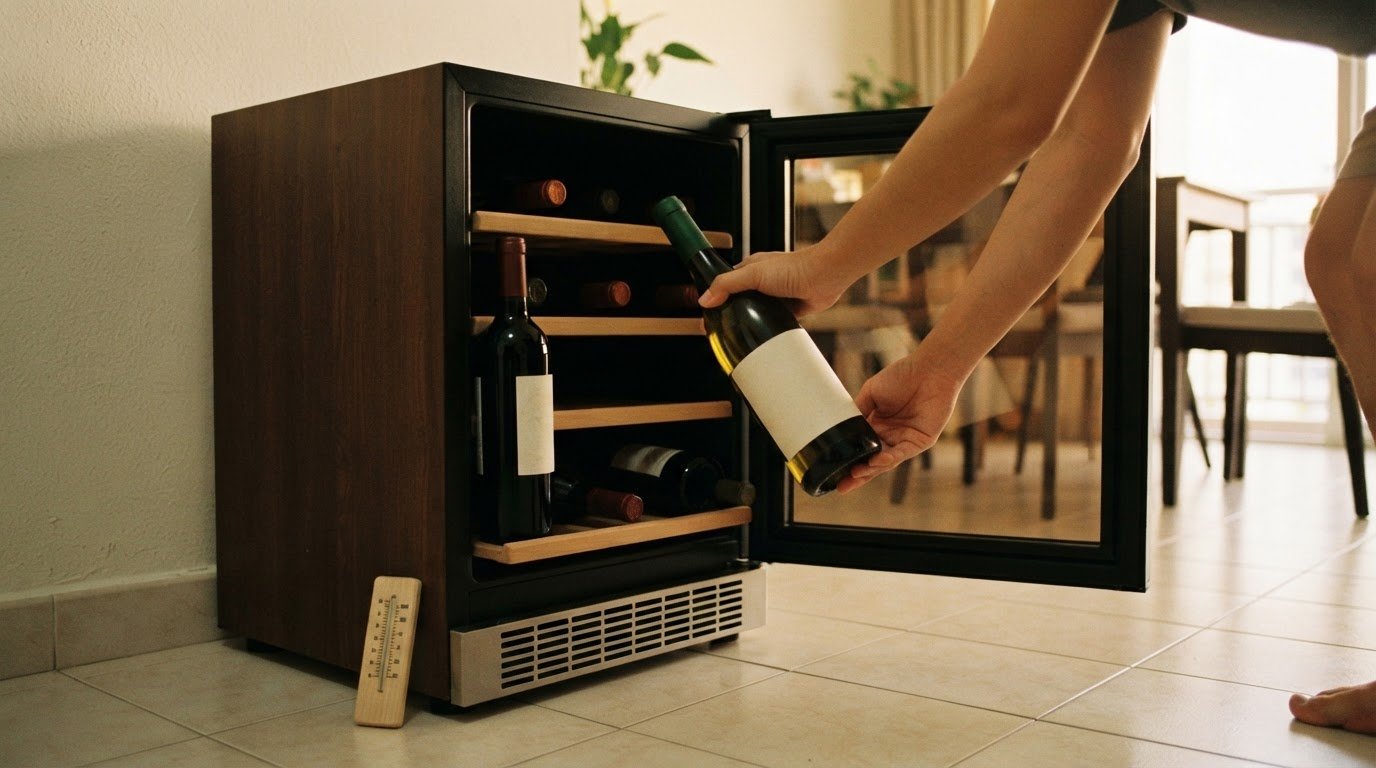
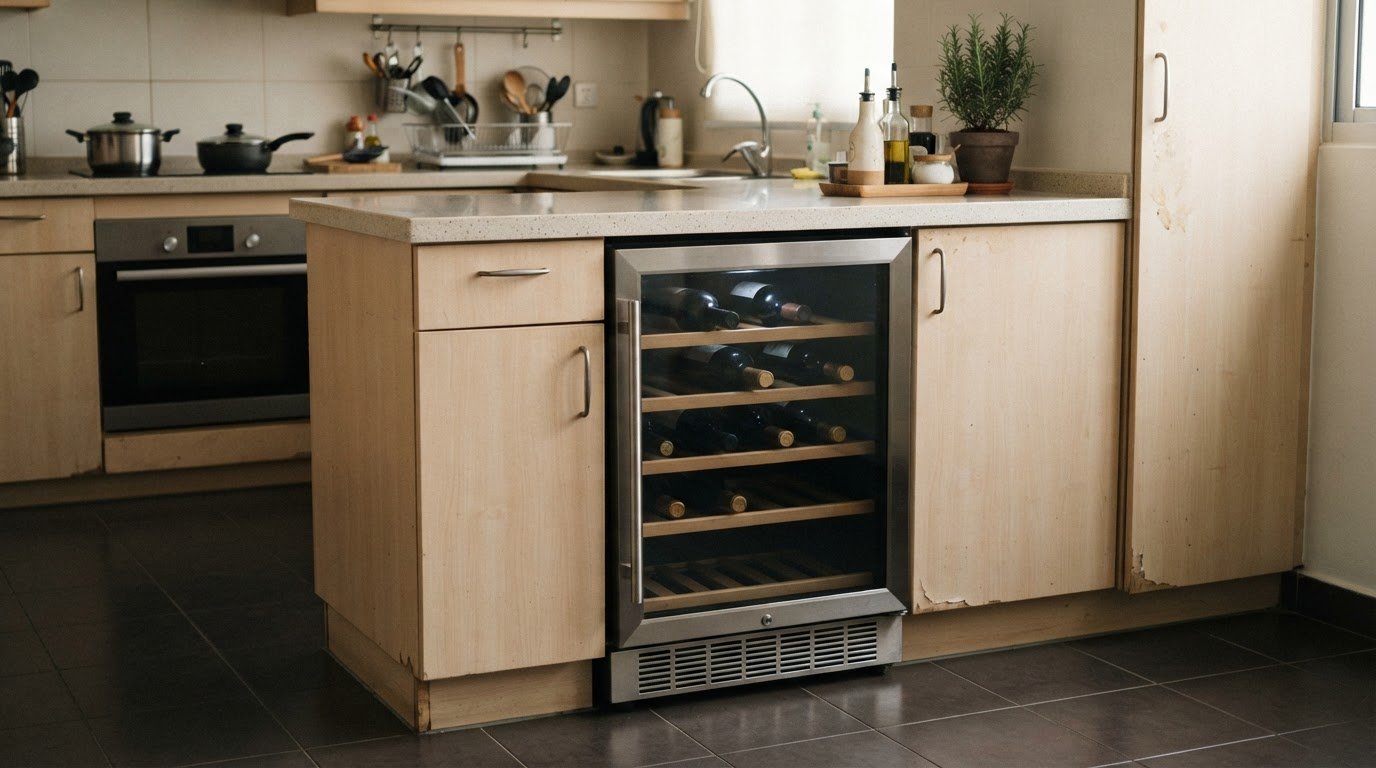
A single-zone wine cooler has simpler controls and can offer more bottle capacity per dollar, while dual-zone models use separate compartments and generally take more space. Measure the available floor or cabinet space, then compare each model’s stated dimensions and bottle capacity. Singapore buyers should also review warranty coverage and confirm the fridge’s rated power compatibility with Singapore’s supply before choosing.
First check that the fridge fits your bottle count and available space, then match its temperature setup to how you plan to enjoy your wine.
Single, Dual, and Triple Zones
A single-zone fridge cools its cabinet to one consistent temperature, making it a straightforward choice for long-term storage or a collection focused on reds or whites. For mixed red and white storing, 12°C can serve as an all-purpose setting. A dual-zone fridge has two independently controlled compartments, so each wine type can have its own temperature. Its advantage is flexibility; its trade-offs are added space and cost. Triple-zone models add another temperature area for more varied collections, including sparkling wines.
Storage and Serving Use
For ageing, a single-zone cabinet set around 12-14°C suits long-term storage. Serving calls for more variety: whites and sparkling wines are generally served cooler than reds, so separate zones can keep bottles closer to their serving temperatures. A dual-zone setup is useful if you regularly serve red and white at the same gathering. If most bottles are stored for later, one stable setting may be more practical than dedicating compartments to serving.
Temperature and Protection Factors
Zone count alone doesn’t determine temperature stability, humidity control, vibration management or UV protection. Those qualities depend on the cabinet’s design and listed features, so compare individual model specifications rather than assuming a dual-zone fridge protects wine better. Its clear advantage is separate temperature settings, not automatic superiority in every protection category. Prioritise the features that suit your collection and intended location.
Dual-zone temperature ranges for reds, whites and sparkling wines
Two independently controlled compartments let you cool different wines at once. Set each space according to whether bottles are stored or ready for serving.
Independent Compartment Controls
A dual-zone wine fridge gives each compartment its own temperature control, unlike a single-zone cabinet’s shared setting. The upper zone is often used for whites at 45°F to 52°F, while the lower zone suits reds at 55°F to 65°F. This split helps keep red and white bottles at different temperatures inside the same unit, without adjusting one shared space for every bottle.
Serving Temperature Settings
Set temperatures around the wine’s style, not simply its colour. Light, aromatic whites are best served at 7°C to 10°C, while full-bodied reds suit 16°C to 18°C. Champagne and sparkling wines have a serving range of 6°C to 9°C, slightly cooler than many white wines. A dual-zone fridge can hold two of these temperature needs simultaneously, but it cannot give each type its own compartment when all three styles are stored together.
For example, use one zone for whites and another for reds when planning a dinner. Sparkling wines may need a colder serving temperature, so consider which bottles you expect to pour first.
Serving Temperature Adjustment
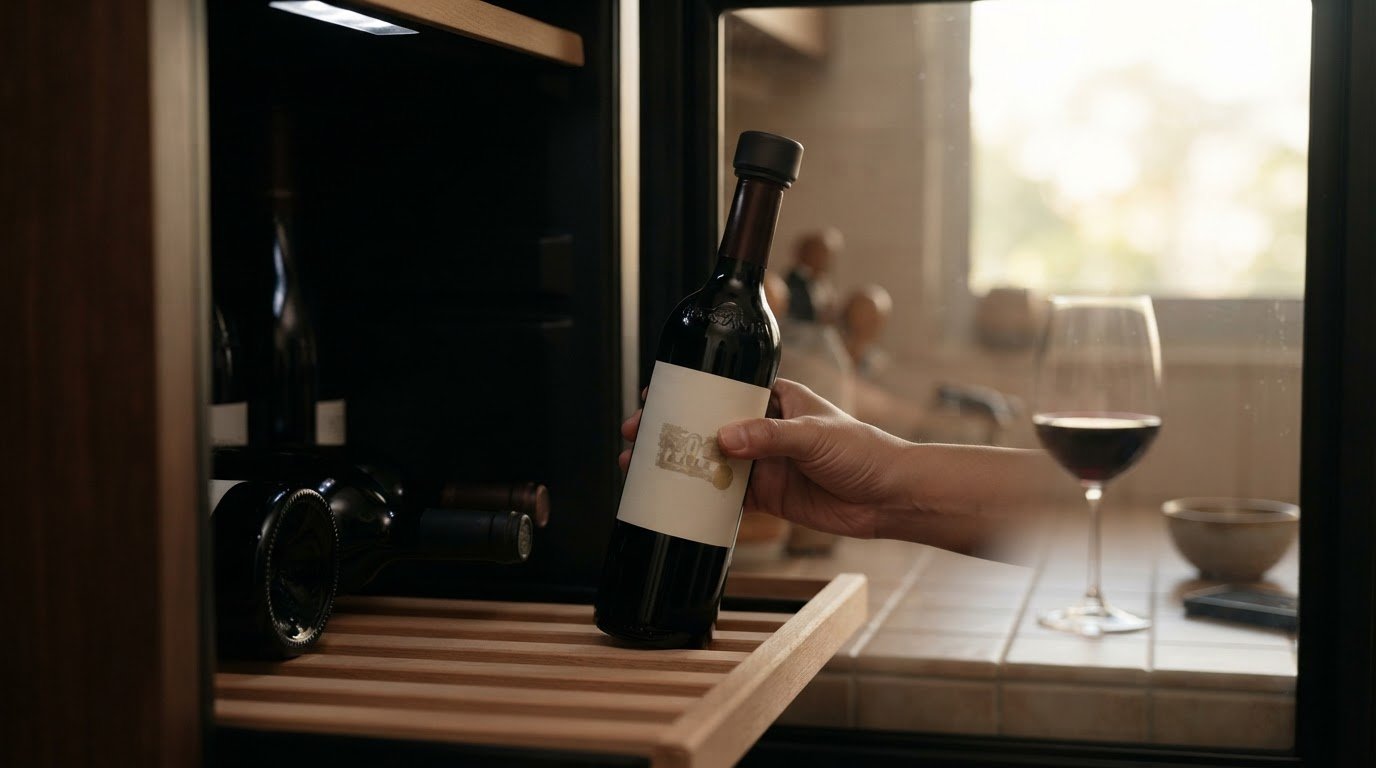
Even with separate zones, a small adjustment before serving can help. Take white wine out of the refrigerator about 20 minutes before pouring; put red wine in the refrigerator for about 20 minutes before serving. These steps let whites warm slightly and reds cool slightly. They’re useful when a bottle’s current temperature doesn’t match the serving range you prefer.
Build your serving plan around the bottles you’ll open, then explore South African wines to find options for your collection.
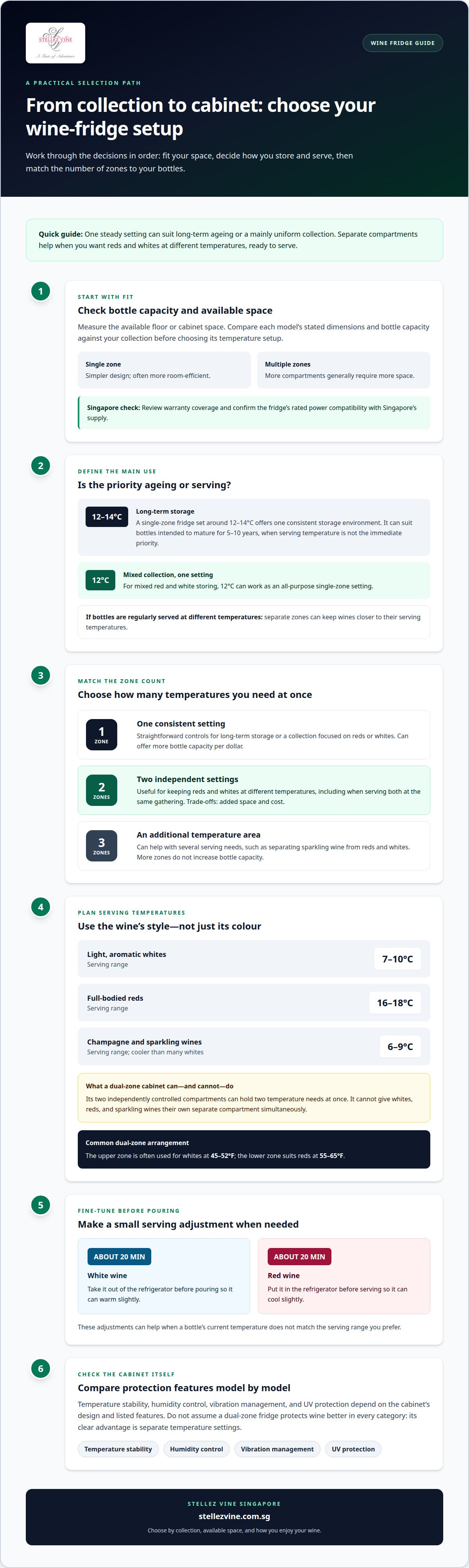
Using dual-zone fridges for storage and service
Choose a dual-zone fridge if your collection includes bottles at different stages: some ageing, others ready to serve. Its independently controlled compartments let you set separate temperatures for storage and service. That flexibility can help with reds and whites, though it doesn’t give every wine its own dedicated space.
Can a dual-zone wine fridge maintain different storage and serving temperatures at the same time? Yes. Its two independently controlled areas allow separate settings. Set each compartment for its intended use, then arrange bottles according to whether they’re ageing or nearly ready to serve.
For long-term ageing, a single-zone fridge set to 12-14°C offers one consistent storage environment. This can suit bottles intended to mature for 5-10 years, when serving temperature isn’t the immediate priority. A dual-zone cabinet can also separate ageing bottles from wines kept closer to serving temperature, but the collection must fit within its two compartments.
A triple-zone fridge adds a third compartment, which can be useful when sparkling wine needs its own cooler space. Champagne and prosecco can sit apart from reds and whites, while another zone is used for longer-term storage. This adds flexibility, but dividing the cabinet into more zones doesn’t increase its bottle capacity.
Don’t choose by cooling technology alone. Compressor or thermoelectric describes how a cooler works, not whether it has one, two or three temperature zones. Compare each model’s stated controls and intended use. A collection with ageing reds, serving whites and chilled sparkling bottles may benefit from three distinct settings; a collection mainly being aged may suit one setting instead.
Plan the arrangement in three steps: group bottles by ageing or serving needs, assign each group a zone, then set temperatures for that purpose. If two groups need distinct settings, dual-zone storage can handle both; consider triple-zone storage only when you have a third distinct need.
Single-zone wine fridge design and use
A single-zone wine fridge cools its entire cabinet to one temperature. This straightforward design suits a collection with one main type of wine, or bottles being stored for later rather than kept at different serving temperatures.
For long-term ageing, a setting around 12-14°C is recommended. A practical single-zone setting is 55°F, while wine of all types can be stored and aged between 53°F and 57°F. One consistent temperature means you don’t need to divide bottles between compartments or manage separate controls. It can also suit a large collection of red wines or whites, provided the bottles share the same storage goal.
Mixed collections require a decision. A single-zone fridge can be set to 12°C as an all-purpose option for red and white wine over time, but it won’t keep each type at its ideal serving temperature. If you mainly store whites, some single-zone models can be set to 8-10°C. That setting is less suitable for ageing a mixed collection, so choose according to the bottles’ purpose, not colour alone. The single zone vs dual zone wine fridge pros and cons comparison starts with this trade-off between one shared setting and separate controls.
Check how temperature is distributed throughout the cabinet before arranging bottles. A single-zone fridge may be colder at the bottom than at the top, even though it has one control setting. Store wines with similar needs together, and don’t treat different shelf positions as separate temperature zones.
The main advantages are simpler controls, fewer potential failure points and greater bottle capacity per dollar than a comparable multi-zone model. The limitation is compromise: a collection of reds and whites intended for immediate serving may need different temperatures. In the single zone vs dual zone wine fridge pros and cons decision, choose one zone for ageing, one dominant wine style or a mixed collection stored around 12°C. Choose separate zones when serving readiness matters more.
For a single-temperature setup, explore Eurocave wine fridges as a storage option for your collection.
Stellez Vine Singapore: Eurocave Wine Fridges
Stellez Vine Singapore offers Eurocave Wine Fridges for readers choosing a dedicated home for their collection. Consider this option when your priority is wine storage and you want to compare a specialist fridge with your needs for bottle capacity, temperature zones and placement.
Start with your storage plan: decide whether you’re ageing bottles at one temperature or keeping different wines ready to serve. Then compare the fridge’s stated capacity and dimensions with your available space. Stellez Vine also offers Kadeka wine chillers and Liebherr wine cabinets, alongside Eurocave fridges.
Pair the right cabinet with the wines you enjoy, whether your collection includes South African wines or bottles from other regions. Explore wine fridges and wines at Stellez Vine, and contact the team to discuss your needs.
Make room for the wines you’ll discover next
Your collection is always evolving. New regions, vintages and occasions can change how you store and serve wine, so choose a setup that fits your habits today and leaves room for what you want to explore next. The useful question isn’t which cabinet has more features, but which one makes your wine routine easy to maintain.
Use the single-zone vs dual-zone wine fridge pros and cons to guide your decision, then picture a typical week at home: which bottles are stored for later, and which do you reach for when guests arrive? That routine can clarify whether one shared environment or more flexibility suits your space and collection.
When you’re ready to take the next step, contact Stellez Vine Singapore to discuss your wine storage needs. Choose with intention, and make every bottle part of a collection you’re excited to enjoy.
Frequently Asked Questions
Does Zone Type Affect Running Costs?
Dual-zone and triple-zone fridges can cost slightly more to run than equivalent single-zone models. The difference between appliances depends on their specifications and use, so zone count alone won’t determine running costs. If you store bottles at one temperature, compare single-zone models; if you regularly serve different wine styles, separate controls may make the additional running cost worthwhile.
What is the difference between single-zone and dual-zone wine fridges?
A single-zone fridge cools its cabinet using one temperature setting, while a dual-zone model has two independently controlled compartments. The difference matters most when your routine includes wines that need different temperatures at the same time. A household that serves whites and reds on different occasions may value separate controls; a collection being aged can be managed with one setting.
What temperatures are best for storing red, white, and sparkling wine?
For storage and ageing, keep all wine types between 53°F and 57°F. Serving temperatures differ: light, aromatic whites suit 7°C to 10°C, full-bodied reds 16°C to 18°C, and Champagne or sparkling wines 6°C to 9°C. These are distinct purposes, so don’t treat a serving setting as a long-term storage target. A consistent storage temperature supports bottles across styles.
What are the pros and cons of a single-zone wine fridge?
A single-zone fridge offers simpler controls, fewer potential failure points and generally more bottle capacity per dollar than a comparable multi-zone model. It’s a practical match for ageing bottles or collections focused on one type, such as red wines. Its trade-off appears when red and white bottles need different serving temperatures at once: one shared setting means choosing a compromise.
How much more do dual-zone wine fridges cost than single-zone models in Singapore?
Dual-zone models can cost slightly more to buy than equivalent single-zone fridges, but there isn’t one fixed premium that applies across Singapore. Capacity, design and features vary between models, so compare appliances with similar bottle capacity and intended use. Include running costs in that comparison too, since dual-zone models can also cost slightly more to run.
How much wine capacity do single-zone and dual-zone fridges offer at different price points in Singapore?
Capacity depends on the specific model, and price alone doesn’t establish how many bottles fit. Freestanding wine fridges can store 40 to 300 bottles, but that range doesn’t determine capacity for every single-zone or dual-zone design. Compare each fridge’s stated bottle capacity with your collection and available space, then assess like-for-like models rather than assuming more zones mean more storage.
Comments