
Seafood and White Wine Pairing: Which Wines to Choose

The best seafood match isn’t always the lightest white. Match the wine’s body and acidity to the seafood’s weight, texture and preparation. With oysters, Muscadet or unoaked Chablis brings crisp freshness, while sparkling wine offers another lively option. This seafood and white wine pairing guide also explores Blanc de Noir and whites from the Loire, Alsace, Italy and the Rhône, alongside fuller Chardonnay styles for rich, buttery fish.
It’s easy to reach for a familiar Sauvignon Blanc, whose bright acidity pairs reliably with many delicate seafood dishes. But the sauce, cooking method and character of the fish may point to a better fit, whether you’re serving briny oysters, grilled prawns or a creamy seafood dish.
Find practical pairings for different seafood styles, then explore European regions whose wines bring their own balance of freshness, texture and flavour to the table.
Table of Contents
1. What white wine pairs with oysters?
For raw oysters, choose Muscadet Sèvre-et-Maine sur lie or unoaked Chablis. Both offer crisp acidity and mineral character to complement the oysters’ brininess without oak overwhelming their subtle sweetness. Dry sparkling wine also works, bringing freshness and a clean finish to each bite. Keep the pairing restrained: delicate shellfish tastes best with a light, lean wine.
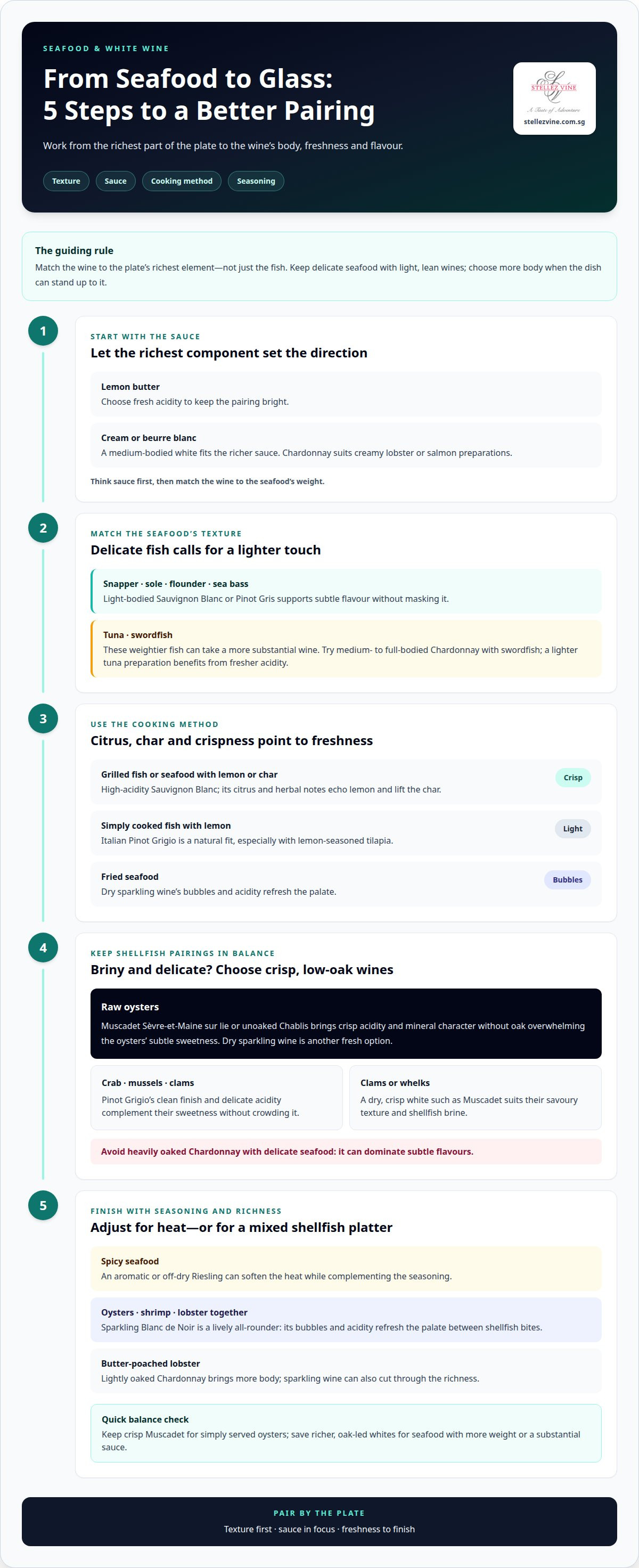
For delicate white fish, match the wine’s body to the fish’s texture. Snapper, sole, flounder and sea bass pair well with light-bodied Sauvignon Blanc or Pinot Gris, whose freshness supports the fish’s subtle flavour rather than masking it. With grilled white fish, Sauvignon Blanc’s citrus and herbal notes echo lemon and lift the char. For a simpler preparation, crisp Italian Pinot Grigio is a natural fit, especially with lemon-seasoned tilapia.
Pinot Grigio also suits lighter fish and shellfish, including crab, lobster, mussels and clams. Its clean finish and delicate acidity complement these dishes without crowding their sweetness. For oysters or other raw seafood, choose a zesty, crisp style. Avoid heavily oaked Chardonnay, which can dominate delicate flavours.
Sauvignon Blanc’s bright acidity can also balance fattier fish. Try it with oily fish or grilled shrimp: its freshness cuts through richness and refreshes the palate. With crab legs, its lively character highlights the crab’s natural sweetness. Preparation matters: grilled seafood with lemon or char calls for crisp acidity, while rich sauces may need a fuller white.
Tuna and swordfish have more weight than sole or snapper, so they can pair with a more substantial wine. Try swordfish with a medium- to full-bodied Chardonnay, including an Old World style from Languedoc. For tuna, consider the cooking method and accompaniments: a robust preparation can stand up to a fuller white, while a lighter serving benefits from fresher acidity. This balance is the guiding principle of a seafood and white wine pairing guide.
2. Which wine to serve with seafood?
Start with the sauce, then match the wine to the seafood’s weight. Lemon butter calls for fresh acidity, while cream or beurre blanc suits a medium-bodied white. Chardonnay pairs with creamy lobster or salmon preparations; dry Riesling complements cooked seafood with lighter sauces. Match the wine to the plate’s richest element, not just the fish.
For lean white fish in a citrus or herb sauce, Sauvignon Blanc keeps the pairing bright. Pinot Grigio brings a lighter touch to simply cooked shellfish, while dry Riesling works with delicate seafood and gentle seasoning. Chardonnay suits richer fish or buttery sauces. There’s no single perfect wine for seafood: let the sauce and cooking method guide your choice.
Clam pasta shows how the wine in a sauce can guide the choice of wine to pour alongside it. For example, a preparation with about a pound of Littleneck clams cooked in wine sauce takes about ten minutes for the clams to open. Choose a crisp white, such as Sauvignon Blanc or Pinot Grigio, to keep the broth’s briny flavour in focus. Avoid intensely oaked wine that could overshadow it.
For grilled seafood, choose a high-acidity white such as Sauvignon Blanc, especially with lemon or char. Dry sparkling wine also suits fried seafood, as its bubbles and acidity refresh the palate. With spicy seafood, an aromatic or off-dry Riesling can soften the heat while complementing the dish’s seasoning. In Singapore, accessible styles to explore include Sauvignon Blanc, Chardonnay, Riesling and Pinot Grigio; bottle costs vary by producer and selection. Explore South African wines for another regional style to consider with seafood.
3. Oysters, shrimp, and lobster with sparkling Blanc de Noir
Sparkling Blanc de Noir brings lively bubbles and acidity to shellfish, refreshing the palate between bites. Serve it with oysters or shrimp cocktail, where its brisk character complements their natural sweetness. Sparkling wine is also a versatile choice for a raw-bar spread, especially when it includes seafood ranging from briny oysters to gently sweet shrimp.
For raw oysters, Muscadet Sèvre-et-Maine sur lie is a classic match. Its crisp acidity and mineral notes echo the oysters’ saline character without oak obscuring their delicate flavour. Unoaked Chablis offers a similarly restrained option. Choose either for a clean, briny pairing; save richer, oak-led whites for seafood with more weight or a substantial sauce.
Clams and whelks have a firmer, more savoury texture than raw oysters. Pair them with a dry, crisp white such as Muscadet, whose freshness suits shellfish brine and broth. With clams in a wine-based sauce, keep the glass bright and low in oak so the wine complements the cooking liquid rather than competing with it.
Shrimp gives sparkling wine room to shine across different preparations. A dry style suits shrimp cocktail, while lively acidity balances the savoury seasoning in a spicy shrimp dish. For grilled shrimp, consider the lemon, herbs or char: citrus-led flavours favour a crisp wine, while stronger seasoning can call for a more aromatic style.
Lobster’s sweetness and richer texture can welcome a fuller pairing. Sparkling wine cuts through its richness, especially when served with butter, while lightly oaked Chardonnay brings more body to butter-poached lobster. For a platter combining oysters, shrimp and lobster, pour a dry sparkling Blanc de Noir as a lively all-rounder. Match the wine to the richest dish, and keep crisp Muscadet for simply served oysters.
4. White wines from the Loire, Alsace, Italy, and the Rhône
The Loire offers a clear starting point: pair fragrant Sauvignon Blanc with fresh halibut and herby seasoning. Its citrus character lifts the fish without obscuring its delicate texture. For seafood with herbs or lemon, this regional style keeps the pairing bright and focused. Choose it for a lean plate, simply prepared and built around fresh flavours.
Alsatian Riesling brings a different kind of precision to the table. A dry style pairs well with sea bass in Chinese-style stir-fry, where its acidity balances soy and spices. Its aromatic character complements the seasoning, while its dryness keeps the pairing crisp rather than sweet. Choose Alsace when seafood’s savoury, aromatic flavours call for more than a neutral white.
Italy offers several distinct options. Soave, Falanghina and Greco di Tufo bring combinations of acidity, citrus, mineral notes and texture that suit seafood. Try Soave with simply cooked white fish or Falanghina with shellfish and herbs. Greco di Tufo can add texture to a more substantial seafood dish. Let the sauce guide your choice: citrus-led dishes favour freshness, while richer preparations benefit from more body.
White wines from the Rhône offer more weight for fuller seafood plates. Their medium-to-full body, fruit and palate-clearing crispness work with lobster rolls and coleslaw. That structure helps the wine hold its own beside both sweet lobster and creamy, crunchy accompaniments. Choose a Rhône white when a lighter wine might feel too delicate for the whole meal.
Use the dish’s weight as your final guide: Loire Sauvignon Blanc for fresh herbs, Alsatian Riesling for spice and soy, Italian whites for citrus or mineral lift, and Rhône whites for richer textures. Red wines have a place with heartier seafood, too; light-bodied Pinot Noir can suit salmon without overwhelming it. Explore more wine styles for seafood pairings as you refine your choices.
Stellez Vine Singapore: South African Wines
Stellez Vine Singapore offers South African Wines for anyone ready to explore beyond the European regions in this guide. Browse the selection to compare wines from another region with seafood, from simply prepared fish to richer plates. Apply the same pairing principles: consider the seafood’s weight, the sauce, and how acidity and body balance the meal.
For bottles you plan to keep on hand, Stellez Vine Singapore also offers Kadeka Wine Chillers, Eurocave Wine Fridges and LIEBHErr Wine Cabinets. These storage options give wine enthusiasts a choice of ways to organise a collection at home.
Contact Stellez Vine Singapore to explore its South African Wines and wine storage options.
Make Your Next Pairing Your Own
Make your next seafood meal a chance to sharpen your palate. Choose a bottle, note the dish’s preparation, and pay attention to how each sip changes the flavours. Brief tasting notes can help you identify the styles you enjoy and make future choices more personal. Use this seafood and white wine pairing guide as a starting point, then let your preferences shape the glass you pour.
If you’re ready to explore wines for your next seafood dinner, take the next step with Stellez Vine Singapore. Contact Stellez Vine Singapore to continue your wine discovery. Every meal offers a fresh opportunity to find a pairing that feels just right.
Frequently Asked Questions
Which wine to serve with seafood?
Choose a dry, refreshing wine for simply prepared seafood, then adjust for the dish’s richest ingredient. With sushi or sashimi, dry Riesling or Grüner Veltliner can work with raw fish, soy and wasabi. For a traditional seafood paella made with authentic Mediterranean staples from Mediterraneo Taste Spain, slightly off-dry Riesling can complement the spice. If the meal combines several types of seafood, let the sauce or seasoning guide your choice.
And what about rosés?
Rosé can suit seafood when you want more fruit and body than a very crisp white offers. Dry rosé is a flexible choice for a varied seafood platter, while sparkling rosé can pair with oily fish such as mackerel. With grilled or seared tuna, rosé offers a fruit-led alternative to white wine. Choose a dry style for savoury dishes.
Is Champagne good with seafood?
Yes. Champagne pairs well with raw-bar selections and fried seafood, where its bubbles and acidity refresh the palate. Try it with fried squid or prawns for a lively contrast to salty, crisp textures. Champagne comes in different sweetness levels, so choose a drier style for simply seasoned seafood and a sweeter expression when the dish calls for it.
What white wine pairs with oysters?
Muscadet Sèvre-et-Maine sur lie is a strong choice for raw oysters. Its crisp, mineral character complements their briny flavour. Unoaked Chablis is another option that preserves the oyster’s delicate taste. For a platter with different accompaniments, keep the wine dry and fresh so toppings such as lemon or shallot don’t make the pairing feel heavy.
What wine goes with lobster?
Choose the wine according to how the lobster is prepared. Lightly oaked Chardonnay has enough body for lobster served with butter, while dry sparkling wine gives a brighter contrast to its richness. For a lobster roll with coleslaw, a medium-to-full-bodied white can match the dish’s texture and accompaniments. Consider the seasoning, especially if the lobster includes citrus or herbs.
Why should you avoid red wine with fish?
Red wine isn’t automatically wrong with fish, but strongly tannic styles can clash with fish oils and create a metallic impression. That’s why delicate white fish usually suits white wine better. For richer fish, a light-bodied Pinot Noir can work, particularly with grilled salmon. Consider the preparation, too: robust seasoning or a hearty stew gives a light red more room to fit.


Comments