
Low Tannin Red Wine List: Choose Smooth, Easy-Drinking Reds

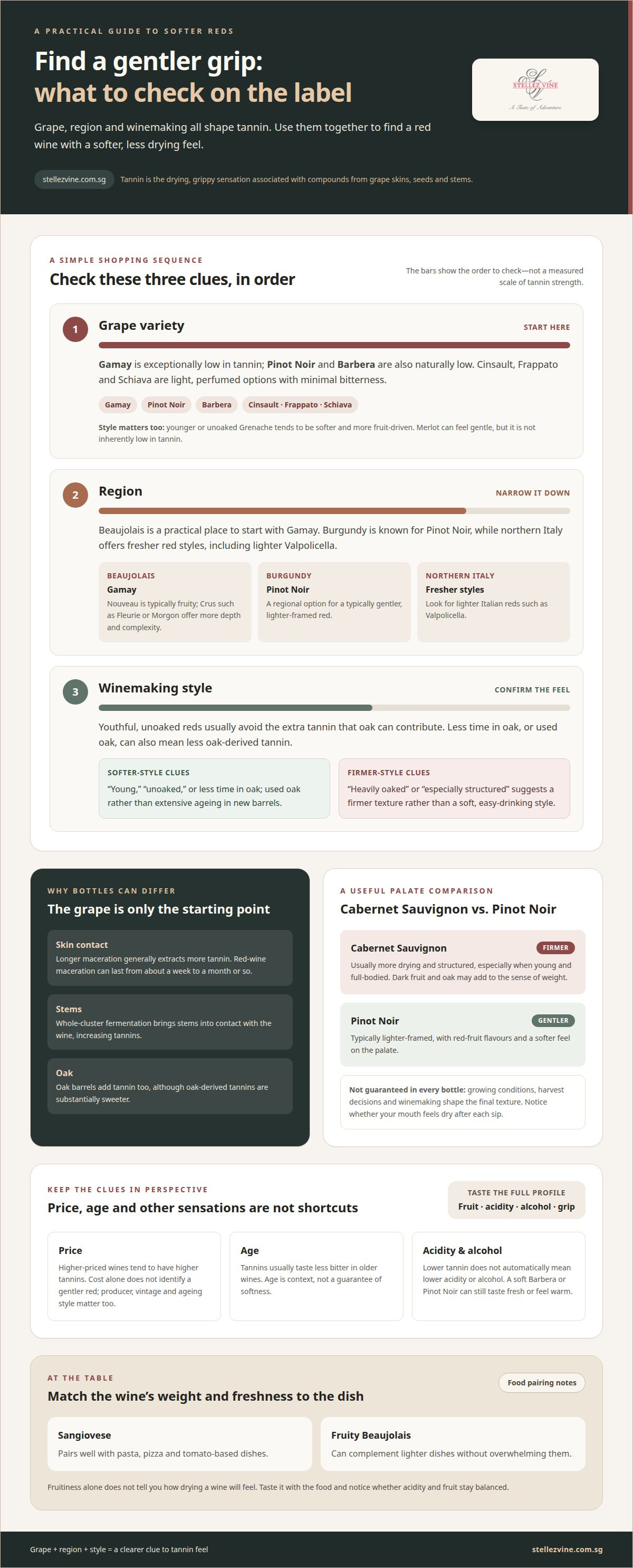
The boldest red isn’t always the most satisfying pour. Tannins are natural compounds from grape skins, seeds and stems that can leave a drying, grippy sensation. For a softer feel, start with Pinot Noir or Gamay. A useful low tannin red wine list can also include Barbera, Cinsault, Frappato and Schiava.
If some reds taste too drying or astringent, the grape name is a helpful starting point, but it isn’t the whole story. Skin contact, stems and oak ageing also shape a wine’s tannins, so bottles made from the same grape can feel quite different.
Learn how tannins work, how winemaking affects their grip and which styles and regions are worth exploring, from Beaujolais Gamay to Barbera from Piedmont. You’ll also find practical label clues to help you choose a red with supple texture and plenty of character.
Table of Contents
1. How grape variety and winemaking influence tannin levels
Tannins are phenolic compounds found in grape skins, seeds and stems. Red wine absorbs them during fermentation with the skins. The grape sets a starting point: Pinot Noir’s naturally thin skins contribute to lighter-coloured, softer-structured wines, while Gamay is typically very low in tannin. These grapes are useful starting points for a low-tannin red wine list, especially if you enjoy bright red fruit flavours.
Pinot Noir, Gamay, Grenache and Barbera each offer a different balance. Pinot Noir and Gamay are generally low in tannin, although Gamay can leave a distinct bitter note on the finish. Younger or unoaked Grenache tends to be softer and more fruit-driven than powerful Grenache-based styles. Barbera is naturally low in tannins. Cinsault, Frappato and Schiava are also light, perfumed choices with minimal bitterness. Merlot can feel gentle, but it isn’t inherently low in tannin.
Winemaking can shift a grape’s natural profile. During maceration, juice stays in contact with grape skins for days or weeks; longer contact generally extracts more tannin. Red wine maceration can last from about a week to a month or so. Whole-cluster fermentation brings stems into contact with the wine, increasing tannins. Oak barrels add tannin too, although oak-derived tannins are substantially sweeter. For a softer impression, look for a youthful style with little or no oak influence.
Lower tannin doesn’t automatically mean lower acidity or alcohol. These are distinct features, so a soft-textured Barbera or Pinot Noir can still taste fresh or feel warm. Judge each wine by its full profile: fruit, acidity, alcohol and the drying sensation as you taste. This helps you choose a smooth red without assuming it must also be low in acidity or alcohol.
2. Comparing tannin levels in Cabernet Sauvignon and Pinot Noir
Cabernet Sauvignon usually has a firmer, more drying structure than Pinot Noir. Its tannins can feel pronounced, especially in a young, full-bodied wine, where dark fruit and oak may add to the sense of weight. Pinot Noir is typically gentler on the palate, with red fruit flavours and a lighter frame. Choose Pinot Noir for a softer contrast to Cabernet’s grip.
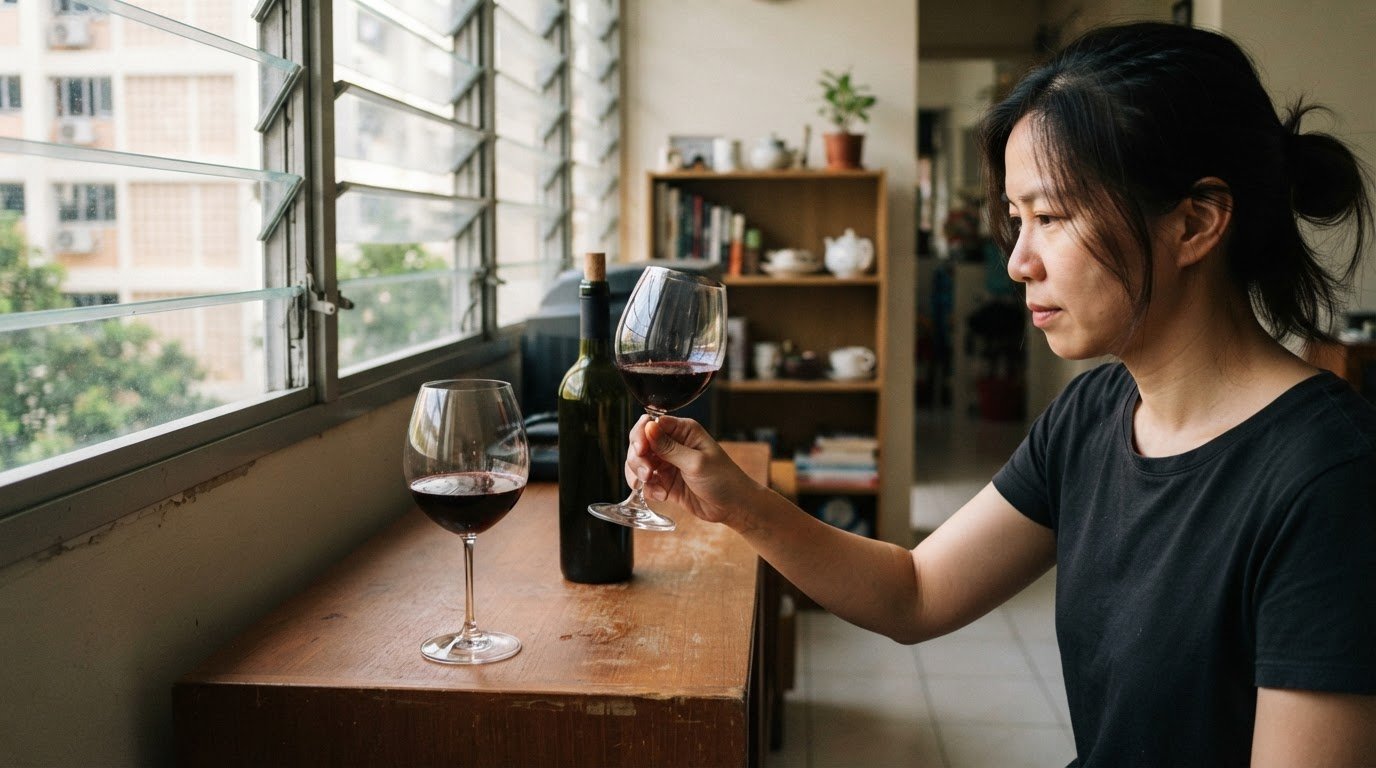
The difference isn’t guaranteed in every bottle. Growing conditions, harvest decisions and winemaking shape the final texture, so wines made from the same grape can taste distinct. As you taste, notice whether your mouth feels dry after each sip, then compare that sensation with the wine’s fruit and acidity. Barbera can also be a useful alternative: its tannins are naturally low, though its lively acidity gives it a different profile from Pinot Noir.
Merlot can defy expectations. It isn’t inherently a low-tannin grape, but it’s often made in a softer style and usually shows very little bitterness. A smooth Merlot can suit drinkers who want a rounded red without Cabernet’s firmer structure. Check the wine’s style as well as its grape name.
Price alone doesn’t identify a gentle red. Higher-priced wines tend to have higher tannins, while tannins usually taste less bitter in older wines. Consider the producer, vintage and ageing style alongside the label price, rather than using cost as a shortcut to softness.
For affordable low-tannin options in Singapore, consider Pinot Noir, Gamay or Barbera. Their prices depend on the particular producer, origin and vintage, so compare bottle listings in Singapore dollars rather than assuming the grape determines cost.
For another regional style to explore, browse South African wines and consider how each bottle’s grape and structure suit your palate.
3. How to identify low-tannin wines when shopping
Start with the grape and region on the label. Gamay is exceptionally low in tannin, and Beaujolais is a practical place to begin. Beaujolais Nouveau is typically fruity, while Beaujolais Crus such as Fleurie or Morgon offer more depth and complexity. Expect cherry and other bright fruit notes, but remember that fruitiness alone doesn’t tell you how drying a wine will feel.
Next, look for clues about ageing and winemaking. Young, unoaked red wines usually avoid the extra tannin oak can contribute. Wines aged in used oak, or for less time in oak, can also have less oak-derived tannin than wines matured extensively in new barrels. If a label describes a wine as heavily oaked or especially structured, expect a firmer texture rather than a soft, easy-drinking style.
Price and age offer context, not a reliable shortcut. More expensive wines tend to have higher tannins, while tannins usually taste less bitter in older wines. A high price doesn’t automatically mean a wine will feel harsh, and a lower price doesn’t guarantee softness. Consider grape, region and ageing details together, then decide whether the style matches your preference for a gentler finish. Low-tannin reds can suit drinkers who prefer less mouth-drying grip while still enjoying red fruit and savoury flavours.
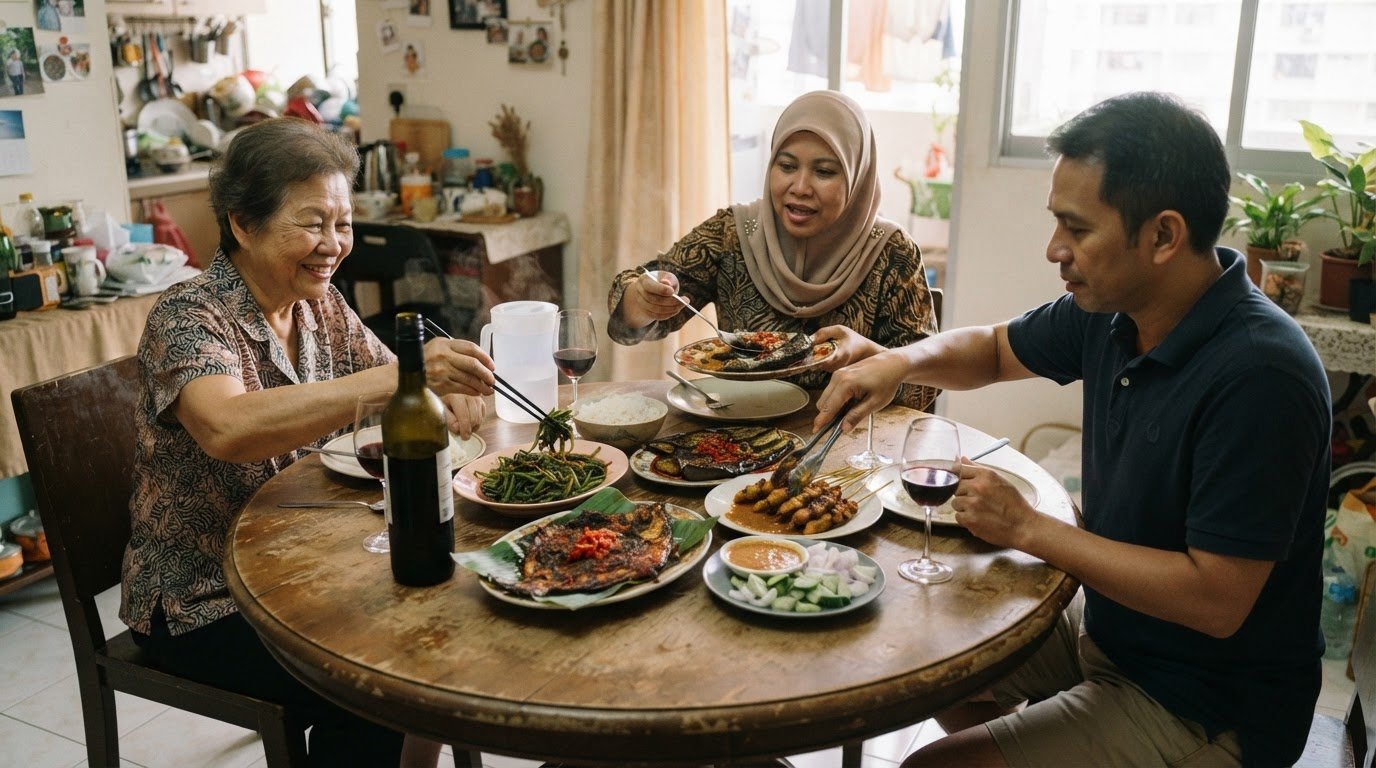
For food, match the wine’s weight and freshness to the dish. Sangiovese pairs well with pasta, pizza and tomato-based dishes, making Italian examples natural choices for those meals. A fruity Beaujolais can complement lighter dishes without overwhelming them. Taste the wine with your food and notice whether its acidity and fruit stay balanced with each bite.
At the shelf, use a simple sequence: choose a variety such as Gamay, look for Beaujolais on the label, then scan for youthful or unoaked style cues. This helps distinguish softer-tannin reds from bottles chosen mainly for boldness or oak. Note the grapes and regions you enjoy, such as Gamay from Beaujolais or Sangiovese with tomato-rich Italian cooking, to guide your next tasting.
4. Choosing regions and winemaking styles
Let the region guide your first pour. Burgundy, Beaujolais and northern Italy are cool-climate sources of fresher, less tannic red styles. They’re useful starting points when you want lift and fruit rather than a heavily structured finish. Look for Pinot Noir from Burgundy, Gamay from Beaujolais, or lighter Italian reds such as Valpolicella.
Beaujolais ranges from bright, immediate fruit to wines with greater depth. Beaujolais Nouveau is fermented for only a couple of weeks before its late-November release. Beaujolais Crus, including Fleurie and Morgon, offer more complexity. Choose Nouveau for a youthful, fruity impression, or explore a Cru for more layered character. Gamay gives both styles their regional connection.
Northern Italy offers several distinct choices. Valpolicella is a lighter red, while Lambrusco di Sorbara generally has less tannin than Lambrusco Grasparossa. Those names matter: even within one broad wine family, grape selection and style can change a wine’s grip. For a fresher, softer impression, start with Sorbara or a straightforward Valpolicella, then compare their structure in the glass.
Grenache offers another route, especially in younger or unoaked styles, which tend to be softer and more fruit-driven than powerful Grenache-based wines. Pay attention to the region and winemaking description, not just the grape name. Less oak influence and a lighter style can preserve juicy fruit and keep the finish supple. Compare these clues with the regional names on the label, then choose a profile that suits your meal or occasion.
Ready to explore regional styles? Browse red wines by region and discover a bottle with the freshness and texture you enjoy.
Stellez Vine Singapore: Kadeka Wine Chillers
Stellez Vine Singapore brings together wines and storage options for readers ready to explore beyond grape names and regions. Its South African Wines offer another direction for discovering red styles, while Kadeka Wine Chillers, Eurocave Wine Fridges and LIEBHErr Wine Cabinets provide options for storing a collection at home.
Build a selection around the lighter reds you enjoy, or consider a wine chiller for a dedicated place to store your bottles. The right choice depends on your collection and storage needs, not tannin level alone. Explore South African wines and choose a storage option that suits your setup.
Contact Stellez Vine Singapore to discuss its wines and wine storage options.
Make Your Next Pour Personal
Let your next bottle suit the experience you want, whether it’s a relaxed dinner, an easy evening pour or a new discovery with friends. Keep a low tannin red wine list of grapes and styles you enjoy, and use it to guide future choices without limiting yourself to familiar labels. A little curiosity can lead you to a red that feels just right for the occasion.
For your next discovery, explore South African Wines from Stellez Vine Singapore. If you’re building a home collection, Kadeka Wine Chillers and Eurocave Wine Fridges are also available for wine storage. Choose what suits your plans, then explore the range.
Contact Stellez Vine Singapore for help exploring its wine and storage offerings. Your next favourite pour could be a rewarding discovery.
Frequently Asked Questions
What Are Tannins?
Tannins are plant-derived polyphenols that contribute structure to wine. In the mouth, they can bind with proteins in saliva, creating the drying sensation known as astringency. They also help preserve wine as it ages, which is one reason structured reds can develop over time. Tannins are part of a wine’s texture, not a measure of its quality or sweetness.
What Is the Smoothest Red Wine for Beginners?
There isn’t one smoothest red for every beginner, since “smooth” describes a personal impression rather than a fixed wine category. Start with a small pour and taste it on its own, then try it with a bite of food. Notice whether the texture feels comfortable and whether you enjoy the finish. This simple comparison helps you define what smooth means to you.
Which red wine grape varieties are naturally low in tannins?
Poulsard and Mencía are useful names to explore for low-to-moderate tannin styles. Poulsard often makes a delicate red, while Mencía can offer more depth without the firm structure associated with some powerful reds. Spätburgunder is another label term to recognise on German wines. These varieties broaden your options beyond the most familiar international grapes.
What are the best low-tannin red wines for beginners?
If you’re ready to explore less familiar labels, try Poulsard or Mencía and focus on the overall balance, not just the grape name. Compare how each wine feels with a meal, and note which finish you prefer. Brief tasting notes on texture, fruit and food pairing can make future bottle choices more personal and rewarding.
Which low-tannin red wines are available in Singapore?
Singapore shoppers can look for Poulsard and Mencía on wine lists and retailer catalogues as starting points for lower-tannin reds. These names describe grape varieties, not a guarantee that every bottle will have identical structure. For a specific bottle, use its producer and vintage details to distinguish one style from another, and compare options available in Singapore dollars.
How can I identify a low-tannin red wine from its label or tasting notes?
Use the grape and origin together as clues, then read tasting notes for descriptions of texture and finish. A note describing a wine as delicate or gentle suggests a different structure from one described as powerful or built for long ageing. If tasting, serve many low-tannin reds at 55-60 degrees Fahrenheit to assess the wine without serving it too warm.
Comments