
Light-bodied red wines for summer, chosen for warm weather

A red wine can be a refreshing choice in warm weather. Light-bodied red wines for summer are best served lightly chilled, around 13°C, with the temperature adjusted to suit the day. Their bright fruit, lively acidity and softer tannins make them especially appealing when a heavier red feels too rich.
It’s easy to assume red wine should be served at room temperature, but a gentle chill can add freshness and lift without masking its character. Choose a lighter-bodied red and serve it cool, not cold.
Here’s what to look for, why chilling helps, and how to serve summer reds with relaxed meals in Singapore’s warm weather.
Table of Contents
1. Why chilling red wine can improve enjoyment
The best chilled light-bodied red wines for summer are fruity styles such as Gamay, Beaujolais-Villages and simple Pinot Noir. Serve them cool, not icy, to keep their fresh fruit and aromas expressive.
A gentle chill can make red wine feel more refreshing in Singapore’s warm weather. Aim for about 13°C, adjusting slightly for the conditions and how quickly the bottle warms in the glass. Place it in the fridge for 20–30 minutes before serving, then taste and let it breathe as it comes up in temperature.
Look for pronounced fruit, lively acidity, softer tannins and a lighter body. These qualities help a wine stay bright and easy to sip in warm weather. Chilling a highly tannic red too much, by contrast, can make its astringency more noticeable, leaving a drying sensation that overwhelms the fruit.
Winemaking also shapes how a red responds to chilling. In carbonic maceration, whole, uncrushed grape clusters ferment in a sealed vat filled with carbon dioxide. This technique can emphasise fruit and keep tannins soft in styles such as Beaujolais-Villages, making them enjoyable served cool.
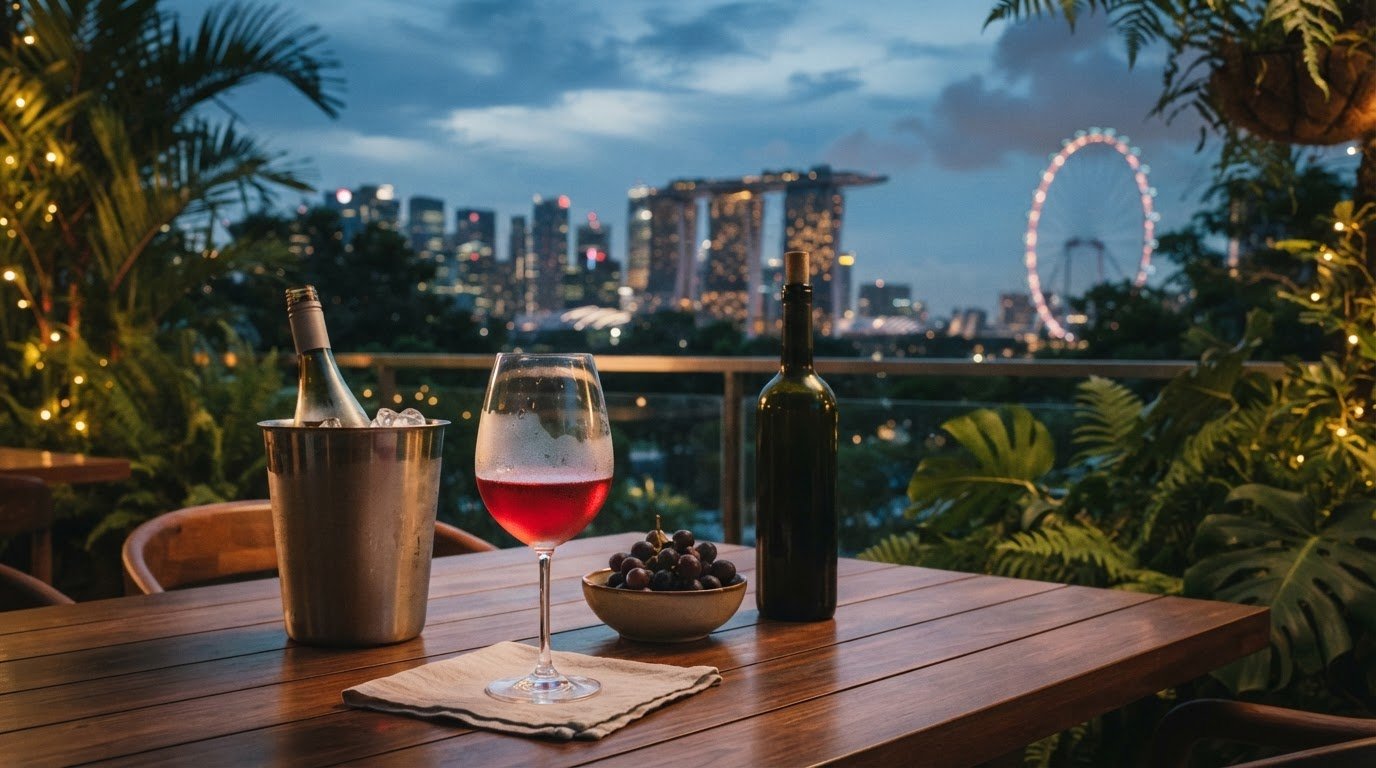
For a quick chill, submerge the bottle in a mixture of crushed ice and water. A regular refrigerator works too for fruity, aromatic reds. Check the wine before pouring, rather than chilling it until its flavours seem muted. On a warm outdoor table, keep the bottle cool between pours.
Pair chilled reds with lighter fare, such as simple Pinot Noir alongside a picnic lunch. For a bolder match, try cool Xinomavro with spicy dishes. Light-bodied red wines for summer also suit casual meals, where bright fruit and gentle tannins complement the food instead of dominating it.
2. Serving temperature for summer reds
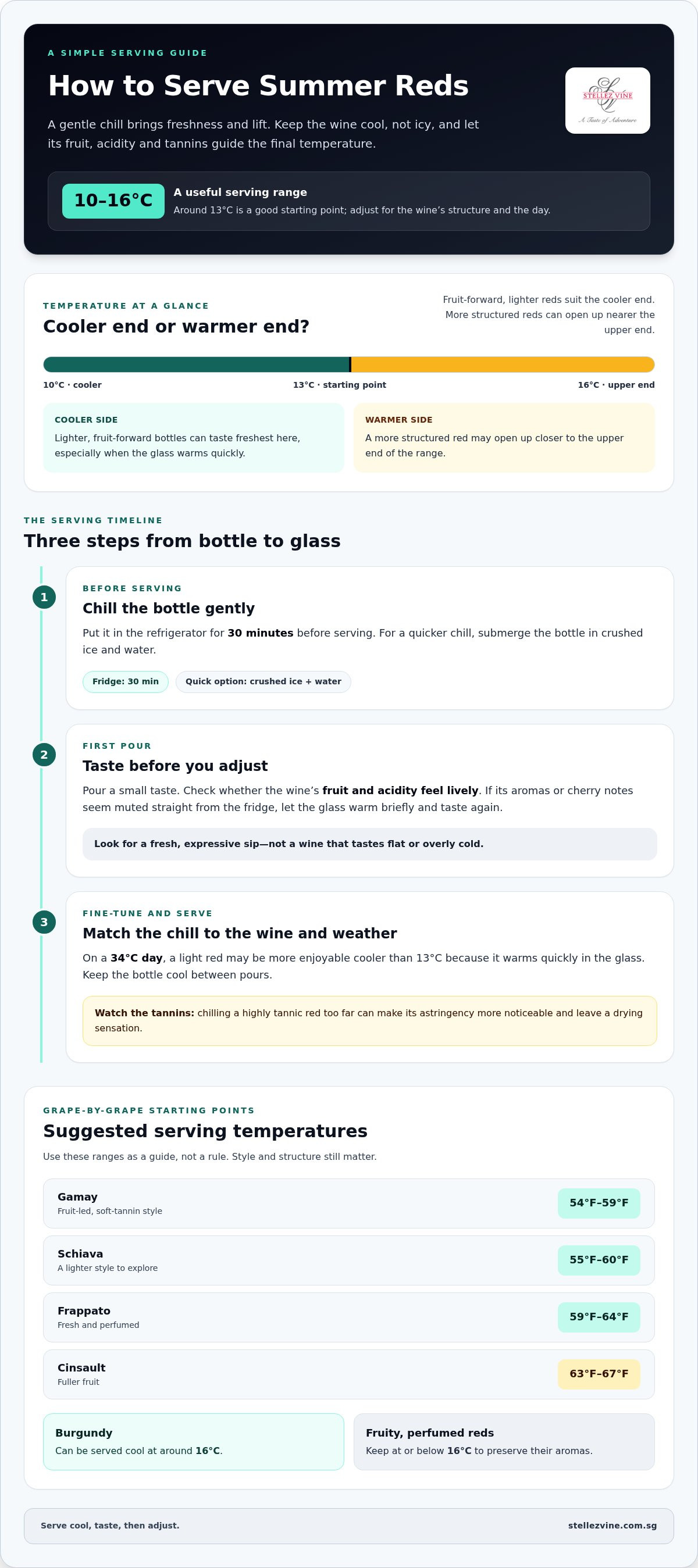
Serve summer reds between 10°C and 16°C, adjusting for the wine’s structure and Singapore’s warm weather. A lighter, fruit-forward bottle tastes freshest near the cooler end, while a more structured red can open up closer to the upper end. Fruity, perfumed reds should stay at or below 16°C, preserving their aromas without making them taste flat.
Use a simple three-step approach. First, chill the bottle in the refrigerator for 30 minutes before serving. Next, pour a small taste and notice whether its acidity and fruit feel lively. Finally, adjust: on a 34°C day, a light red may be more enjoyable cooler than 13°C, since it warms quickly in the glass. Keep the bottle cool between pours.
Match the serving temperature to the grape. Gamay is recommended at 54°F–59°F, while Frappato suits 59°F–64°F. Schiava works at 55°F–60°F; Cinsault, with its fuller fruit, is recommended at 63°F–67°F. These ranges are useful starting points, not a reason to overlook style. A juicy red with soft tannins can feel charmingly cool, while a highly tannic wine may taste more drying when chilled too far.
French reds also show why style matters: Burgundy can be served cool at around 16°C. If the wine’s cherry notes seem muted straight from the fridge, let the glass warm briefly before pouring another taste. Explore French wine selections for a bottle to serve with this measured approach, and use its fruit, acidity, and tannin as your guide.
3. Why Choose Light Red Wines in Warmer Weather?
The best light-bodied reds for summer include Gamay, Zweigelt, Frappato and Pinot Noir. Their fresh fruit and softer structure suit warmer weather, while lower alcohol can make a wine feel less weighty. For Singapore meals, choose the grape and style to match the dish, not simply the wine’s colour.
Balance the food’s weight and seasoning with the wine. Delicate Pinot Noir pairs well with roast chicken or grilled vegetables, whose gentle flavours won’t overwhelm it. Gamay from Beaujolais in France brings fruit-forward character that works with charcuterie or a simple lunch. For richer dishes, look for enough acidity to refresh your palate between bites.
At a summer barbecue, Zweigelt is a versatile choice. Its juicy fruit and soft tannins pair with barbecue dishes, including chilli con carne. Lighter reds can stand up to bold seasoning, not just salads. Serve Zweigelt lightly chilled so its fruit meets smoky, savoury flavours without the grip of a heavily tannic red.
To choose a pairing, consider the dish’s weight and seasoning, then the wine’s structure. Lightly seasoned grilled fish or vegetables call for a fresh, delicate red; richer barbecue meats suit a fruit-driven style. With spicy dishes, choose a red whose fruit can hold its own against the heat. Avoid serving highly tannic Cabernet Sauvignon or Syrah very cold, as the tannins can taste bitter. Instead, pick a softer, brighter wine and consider the dish’s dominant flavour.
Explore different regions and grapes instead of relying on one familiar bottle. Beaujolais offers several fruit-led styles, while Zweigelt brings a juicy alternative from Austria. Light reds can suit everything from a casual lunch to a barbecue; let the food, acidity and serving temperature guide your choice.
4. Characteristics of light-bodied red wines
Light-bodied describes a wine’s weight and texture, not its quality or depth of flavour. These reds often feel less dense, with fresh fruit, lively acidity and gentler tannins. Think crisp cherry rather than a heavy, gripping finish. For summer, consider these qualities together: bright fruit keeps the wine expressive, while softer tannins make each sip feel less drying.
Pinot Noir, Gamay and Frappato each offer a different route to a refreshing glass. Pinot Noir often has delicate fruit and a supple texture; Burgundy Pinot Noir can be served cool. Gamay, particularly from Beaujolais, is known for primary fruit character and soft tannins. Frappato, native to eastern Sicily, has a fresh, perfumed profile. Choose according to the fruit intensity and structure you enjoy.
Refreshing light-bodied varieties include Pinot Noir, Gamay, Frappato, Cinsault, Schiava and Zweigelt. For lower tannins and high acidity, start with fruit-led Gamay or Beaujolais-Villages, where carbonic maceration can emphasise fruit and soften tannins. Cinsault and Schiava are other lighter styles to explore. The grape is a guide, not a guarantee: winemaking choices shape the finished wine.
In Singapore, value-focused options can include approachable bottlings of Gamay, Pinot Noir or Cinsault. Compare the style and producer rather than choosing by grape name alone; an accessible regional wine can offer a lighter alternative to a prestigious Burgundy label. No specific bottle price defines affordability, so let your budget and preferred flavour profile guide the choice.
Use a simple tasting check: look for fresh fruit, noticeable acidity and a finish that doesn’t feel grippy. Then consider serving the wine lightly chilled, as described earlier, and see how its texture changes in the glass. To explore regional styles, browse South African wines and compare their grapes, body and fruit character.
Stellez Vine Singapore: South African Wines
Stellez Vine offers South African wines for anyone ready to explore beyond familiar summer-red grapes. Compare a wine’s fruit, acidity and tannins with the dishes you plan to serve. This helps you choose a bottle for a relaxed meal or warm-weather gathering.
For home wine storage, Stellez Vine also offers Kadeka Wine Chillers, Eurocave Wine Fridges and LIEBHERR Wine Cabinets. Choose a dedicated wine fridge or cabinet if you want wine storage as part of your home setup.
Explore South African Wines and wine-storage options at stellezvine.com.sg.
Make Your Next Glass an Exploration
Let your next summer meal guide your choice. Try a grape or region that’s new to you, and notice how its fruit, acidity and texture work with the food. A familiar favourite can anchor the table, while a new bottle adds a point of discovery. It’s a relaxed way to get to know light-bodied red wines for summer without treating wine selection as a set of fixed rules.
For your next choice, consider what you enjoy most: bright fruit, gentle structure or a more savoury profile. Then explore the selection at Stellez Vine Singapore and choose a bottle that suits your plans. If you’d like to take the next step, contact Stellez Vine Singapore to continue your wine discovery. Here’s to finding a summer red that makes the moment your own.
Frequently Asked Questions
Why Choose Light Red Wines in Warmer Weather?
Lighter reds are a refreshing alternative when a rich, structured wine feels heavy with a warm-weather meal. Their bright fruit and gentler texture suit relaxed lunches, outdoor dining and dishes with fresh herbs or savoury flavours. Choose according to the meal’s seasoning as well as the grape, and keep the wine cool at the table so each pour stays lively.
Why chill red wine?
A slight chill can make red wine feel fresher in warm weather and keep its fruit lively as you sip. It also helps during a long meal: wine in a glass warms faster than wine in its bottle. Pour smaller servings and refresh the bottle’s chill between courses, especially when dining outdoors.
What serving temperature is ideal for light-bodied red wine?
A useful serving range for summer reds is 10°C–16°C, with about 13°C as a practical starting point for a light-bodied bottle. In Singapore’s heat, begin toward the cooler end because wine warms in the glass. Taste before serving a full pour: if the aromas seem subdued, let the glass stand briefly and reassess.
Where can I buy light-bodied red wines in Singapore, and what do they cost?
Stellez Vine sells wines through its online catalogue, with listed prices shown in Singapore dollars. Prices vary by bottle, so compare options by grape, region and style rather than assuming every lighter red fits one price band. Gamay, Pinot Noir and Cinsault are useful grape names to look for as you browse.
What foods pair well with light-bodied red wines in hot weather?
Try a lightly chilled red with tomato-based dishes, grilled mushrooms or roast duck, where savoury flavours complement fresh fruit without overwhelming it. For an outdoor meal, match the wine’s intensity to the seasoning: delicate dishes suit a subtler red, while richer flavours call for more fruit. With very spicy food, choose a juicy style rather than a firm, tannic one.
How long should light-bodied red wine be chilled before serving?
Start by chilling the bottle in the refrigerator for about 20–30 minutes, then check its temperature and taste a small pour. A warmer room or outdoor table can make the wine warm quickly, so keep the bottle chilled between servings. If the fruit seems muted, give the glass a little time to warm before deciding it needs further chilling.
Comments