
Italian Wine Classifications and What Each Tier Tells You

Italy’s highest wine classification is not a guarantee that you’ll enjoy the bottle most. The system has four tiers, from Vino and IGT to DOC and DOCG, which indicate different levels of geographic definition and production rules. This guide to Italian wine classifications explains what the labels can tell you, and what they can’t.
It’s easy to read the tiers as a simple quality ranking, especially when a label carries a prestigious appellation. But classification is better understood as a clue to where a wine comes from and how it was made, not a promise about your personal taste. Even a less restrictive designation can give a winemaker room to create a distinctive style.
We’ll break down each tier, explain what IGT means and why some wines sit outside DOC or DOCG rules, then look at other label terms that add useful context. Use the designations as a starting point: pair them with grape variety, region and style to make a more informed choice from Singapore’s selection of Italian wines.
Table of Contents
Are There Other Quality Classifications for Italian Wines?
Italian designations can specify origin, grapes, production rules, and ageing, rather than simply rank quality. Read the classification alongside the producer, wine type, region, and vintage to understand what a bottle represents.
DOCG Regulations and Tasting Panels
DOCG, or Denominazione di Origine Controllata e Garantita, is Italy’s highest classification, with strict rules for origin, grapes, yields, and production. A wine must also pass a tasting panel before release. Together, these requirements provide a formal check on compliance and sensory characteristics. They don’t determine whether you’ll enjoy the wine: DOCG Sangiovese from different producers or vintages can express distinct styles.
Barolo and Barbaresco Requirements
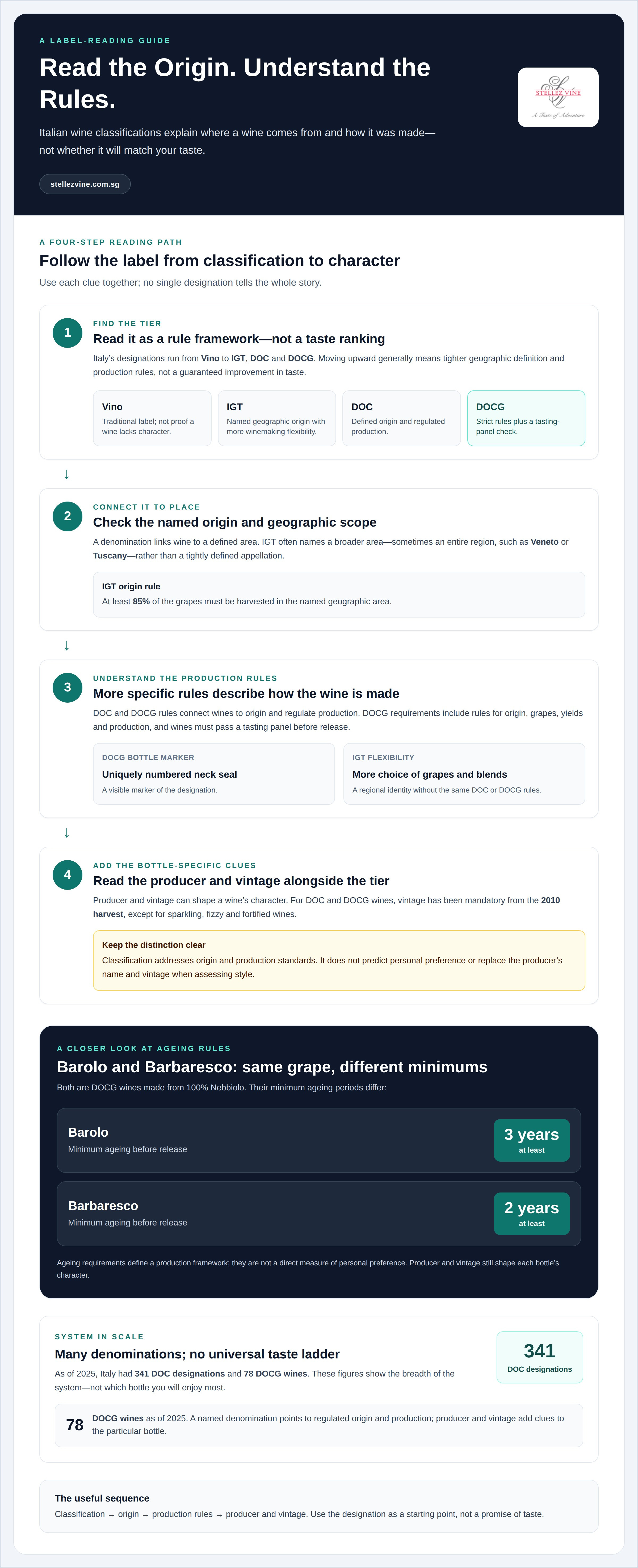
Barolo and Barbaresco are DOCG wines made from 100% Nebbiolo, but their minimum ageing periods differ. Barolo must age for at least three years before release; Barbaresco must age for at least two years. These rules give each designation a specific production framework, while the producer and vintage still shape the bottle’s character. Compare those details when choosing between the two wines, rather than treating ageing time as a direct measure of personal preference.
Classification Rules and European Comparisons
Italian DOC and DOCG rules connect a wine to a defined origin and regulate its production; French AOC also links wine to geographic origin and production conditions. The labels belong to different national systems, so their terms and individual requirements aren’t interchangeable. The European Union introduced the broader PDO and PGI categories in 2009, aligning classifications across Europe. For a Singapore buyer, the useful distinction is that these frameworks describe origin and production standards, not a universal scale of taste.
Classification, Quality, and Official Information
A common misconception is that a higher tier must taste better. Classification rules address factors such as grape variety, region, and production methods; ageing requirements can also distinguish wines such as Barolo and Barbaresco. These rules don’t replace the producer’s name or vintage when you’re assessing style. For reliable information in Singapore, consult official Italian denomination specifications and the European Union’s geographical-indications records, then use the producer’s technical details to understand the individual wine. “Vino da tavola” is a traditional label, not proof that a wine lacks character.
What Are Italian Wine Classifications - and Why Should You Care?
Italy’s designations connect a bottle to its origin and winemaking rules. Read the tier alongside the appellation and producer to understand what the label actually tells you.
Italian Wine Designations
Italy’s system ranges from Vino to IGT, DOC, and DOCG, with tighter origin and production rules at the top. DOC means Denominazione di Origine Controllata; DOCG means Denominazione di Origine Controllata e Garantita. Italy introduced DOC in 1963, DOCG in 1980, and IGT in 1992. These labels help explain the framework behind a wine, but they don’t rank every bottle by taste. A producer may choose IGT or Vino da Tavola rather than DOC or DOCG to retain more winemaking freedom, even when a wine could qualify for a stricter designation.
DOCG Testing and Bottle Markings
DOCG wines must meet their denomination’s production rules and pass a tasting panel. Their bottles also carry a uniquely numbered seal on the neck, a visible marker of the designation. To read a label, first find the classification, then note the named origin and producer. The vintage can add another useful clue: for DOC and DOCG wines, it has been mandatory from the 2010 harvest, except for sparkling, fizzy, and fortified wines. Put those details together rather than relying on one label term.
Italy had 341 DOC designations and 78 DOCG wines as of 2025. Those figures show the breadth of the system, not a quality ladder that predicts your preference. A named denomination points to regulated origin and production; the producer and vintage help distinguish the bottle’s particular character.
For a practical label-reading approach, connect the designation to the wine’s origin, then consider its producer and vintage. Explore the Italian wine selection from Italia - Casa Vinicola Caldirola as you put those clues into practice.
Indicazione Geografica Tipica (IGT)
IGT, or Indicazione Geografica Tipica, gives Italian wines a regional identity with more winemaking flexibility than DOC or DOCG. Italy introduced the designation in 1992, and it now has over 120 IGT classifications. For readers, IGT can signal where grapes come from while leaving producers wider choices of varieties and blends.
An IGT wine must use grapes with at least 85% harvested in the named geographic area. That area is often an entire region, such as Veneto or Tuscany, rather than a tightly defined appellation. The designation also sits within the European Union’s broader Protected Geographical Indication, or PGI, category, introduced in 2009. This connection helps explain how an Italian label relates to the wider European framework.
IGT’s flexibility has a notable Tuscan example: Super Tuscan wines are classified under the designation. Some producers began experimenting with international grape varieties from the 1960s onwards; before IGT arrived, wines made with grapes such as Merlot, Cabernet Sauvignon, and Syrah were labelled Vino da Tavola. The newer category offered a geographic identity without requiring those wines to follow DOC or DOCG rules.
Italy’s major appellations reflect its varied regions: Tuscany includes Chianti Classico DOCG and Brunello di Montalcino DOCG; Piedmont includes Barolo and Barbaresco; Campania includes Fiano di Avellino DOCG. Chianti wine must contain at least 80% Sangiovese and come from the Chianti area. Across Italy, DOC and DOCG geographical denominations encompass over 600 wine zones, each defining origin through its own rules. These names can help distinguish historic places and grape traditions, but IGT gives producers room to shape Italian wines around chosen varieties, blends, and styles. Acidity and flavour still depend on the grapes and production choices, not the designation alone.
Overview of Italian wine classification tiers
Italy’s national system has four tiers, but they answer different questions about a bottle. Read them as a guide to origin and production rules, then consider grape, producer, and style. The distinction matters across Italy’s 20 wine regions, where native varieties and local methods create markedly different wines.
Vino: Italy’s basic category has no geographical or varietal restrictions. It can suit wines made outside a defined denomination, but the label gives less information about regional origin.
IGT: This tier identifies a geographic area while allowing broader choices of grapes and blends. At least 85% of the grapes must come from the area named on the label.
DOC: Denominazione di Origine Controllata ties a wine to a defined zone and rules for grape varieties, yields, and winemaking methods.
DOCG: Denominazione di Origine Controllata e Garantita applies detailed rules to a specific origin and production. Brunello di Montalcino is one familiar example.
Think of the tiers as different degrees of geographic and production definition, not a guaranteed ladder of taste. A Vino label offers broad freedom; an IGT name narrows the geographic context; DOC and DOCG specify more tightly controlled origins and methods. This framework helps explain why a producer may choose a less restrictive category for a distinctive blend.
Other label terms add detail without replacing the tier. “Classico” identifies the historic, most suitable area within an appellation, while “Riserva” indicates ageing only where rules permit it. On a sparkling bottle, the production method also matters: Metodo Classico describes bottle-fermented sparkling wine, while Metodo Charmat indicates second fermentation in a tank. Use these clues alongside the designation to build a fuller picture of the wine’s origin and style.
Stellez Vine Singapore: Italia - Casa Vinicola Caldirola
Stellez Vine Singapore offers Italia - Casa Vinicola Caldirola for readers ready to explore Italian bottles after learning what their classifications reveal. Use the designation as a starting point, then consider the producer, grape variety, region, and style that suit your table. The label gives context; the choice of wine brings that context to life.
If you’re comparing Italian wines with bottles from other regions, Stellez Vine also offers South African Wines and Savage wines. For storing your selection, explore Kadeka Wine Chillers and Eurocave Wine Fridges. Choose what suits your needs: a bottle to discover or a dedicated place to keep your wines.
For Italian wine and storage options, contact Stellez Vine Singapore.
Choose Your Next Italian Pour
Let your next bottle reflect curiosity, not just a label. Use this guide to Italian wine classifications as a starting point, then follow the styles and regions that appeal to you. A familiar grape can offer a useful reference; an unfamiliar one can open the door to a fresh discovery.
As you explore, notice which wines suit your meals and occasions. Let this guide to Italian wine classifications inform your first choices, then let your preferences shape what you try next. The most rewarding bottle isn’t always the one with the grandest designation. It’s the one that brings the right character to your table.
Ready to explore Italian wines in Singapore? Connect with Stellez Vine Singapore and take your next step toward a bottle worth savouring.
Frequently Asked Questions
What Is the Difference Between DOC and DOCG Wines?
DOCG adds extra checks to the controlled-origin framework used for DOC wines. DOC regulations define elements such as permitted grapes, yields, and winemaking for a geographic zone; DOCG wines also undergo a tasting-panel assessment and carry a numbered neck seal. When comparing bottles, treat these markers as evidence of regulated production, then consider the producer and vintage for clues to style.
What Do Italy's Wine Classifications Mean?
The designations describe how closely a wine is tied to a place and its production rules, rather than guaranteeing a particular taste. For example, an IGT label connects a wine with a named area while allowing more flexibility than DOC or DOCG. Use the designation as one clue, then read the producer, grape variety, and vintage together to understand the bottle you’re considering.
What Is Super Tuscan Wine?
“Super Tuscan” describes a style of Tuscan wine associated with producers’ use of international grapes and blends outside traditional appellation rules. The term was coined by Italian wine producers and writers in the 1970s. Some Tuscan winemakers had begun experimenting with varieties such as Merlot, Cabernet Sauvignon, and Syrah from the 1960s onwards; before IGT was introduced, such wines could be labelled Vino da Tavola.
What Is the Difference Between Chianti and Chianti Classico?
Chianti Classico comes from the historic Chianti zone between Florence and Siena, while Chianti refers to wine made within the wider Chianti area. Both names signal a Tuscan origin, but the more specific Classico designation identifies the historic area within the appellation. Chianti Classico bottles also bear a black cockerel emblem, a useful visual clue when browsing labels.
What’s the Point of a Wine Classification System?
A classification system gives wine drinkers a structured way to understand origin and production standards. In Italy, a designation can distinguish a broadly labelled wine from one tied to a more specifically defined zone, such as Brunello di Montalcino. It supports informed comparisons, but it isn’t a shortcut to personal preference: consider the producer, grape, and style when deciding what suits your meal.
What Are the Main Italian Wine Classification Levels: Vino, IGT, DOC, and DOCG?
The four levels move from broadest geographic freedom to more defined origin and production rules. Vino has no geographic or varietal restrictions; IGT names an area and requires at least 85% of grapes to come from it. DOC sets rules for a defined zone, while DOCG adds a tasting-panel assessment and numbered bottle seal. Read the tier as context, not a taste score.



Comments