
Impressing guests with your wine choice, from pairing to serving

The familiar red-with-meat rule can be a poor guide. To impress guests with your wine choice, match the wine to the dish’s dominant flavours and texture, including the sauce and cooking method, not just the main ingredient. Choose a wine that complements or contrasts with those qualities instead of relying on a fixed pairing formula.
A thoughtful bottle sets the tone, but confident hosting comes down to the details too. These practical tips cover pairing wine with a meal, serving it with care and sharing tasting impressions naturally, whether you’re new to wine or a seasoned enthusiast. From choosing a bottle for a varied menu to describing a Riesling’s bright citrus or a Pinot Noir’s red-fruit notes, you can make the experience feel polished, welcoming and easy to enjoy.
Table of Contents
1. Choosing wine to complement the food
Start with the strongest flavour on the plate, including the sauce and cooking method. Grilled steak with pepper sauce may call for a different match than delicately prepared beef. Red wine is a classic choice for red meat, while white wine often suits chicken and seafood. Treat these as starting points, not strict rules: match the dish’s weight and flavour, or create a contrast.
For a Singapore dinner, Riesling’s freshness and acidity can pair well with the rich, spicy flavours of chili crab, according to Prime Minister's Office Singapore. For dessert, consider a sweet wine, whose sweetness can complement the dish. These food-led choices are more likely to impress than picking a bottle by reputation alone.
A wine’s character depends on its producer, vintage and style, not just the grape or region. South Africa, France and Italy have varied wine traditions, while Pinot Noir, Cabernet Sauvignon and Chardonnay are widely recognised grape names. Choose a bottle that suits the meal and occasion rather than assuming a familiar label guarantees quality.
In Singapore, start with the budget you’ve set, then explore wines at different price points. With a modest budget, focus on a well-made wine that fits the menu. With more room, try a distinctive region, grape or producer. A higher price does not automatically make a wine a better pairing.
Avoid choosing by the meat alone, overlooking a bold sauce or serving a wine that overwhelms the dish. Match the glass to the style: use a flute or tulip-shaped glass for sparkling wine, a smaller bowl for light-bodied white, and a suitable glass for fortified sweet wine. Choose clean, clear glasses and pour only one-third or one-half full to leave room for aromas. For a restaurant-style touch at home, introduce the bottle by naming its grape and one flavour to notice.
2. Preparing clean glassware and an ice bucket
Set the table before guests arrive, with a glass ready for each wine you plan to serve. Wash the glasses thoroughly and dry them completely so water spots or lingering detergent aromas don’t distract from the wine. Check each one in good light: a clean rim and clear bowl make the pour look polished.
Keep glassware upright on a clean surface until serving, and handle each glass by the stem rather than the bowl. Your hand can transfer warmth to the bowl and affect the wine’s temperature. Holding the stem also keeps fingerprints away from the area guests use to observe the wine’s colour and clarity.
When serving, carry a glass by its stem and offer it carefully by the base. Avoid touching the rim, where the guest will sip. If you’re moving between the dining table and kitchen, use a stable tray instead of balancing glasses in one hand. This keeps service composed and helps prevent spills.
For chilled bottles, prepare an ice bucket and tongs before guests arrive. The bucket keeps wine cold while you greet people or finish setting the table. Tongs make it easier to handle ice without reaching into the bucket, and guests can serve themselves while you focus on hosting. Place the bucket within easy reach, away from the edge of a crowded table.
When making a toast, clink gently at the bell, the lower part of the bowl, to avoid weakening or breaking the glass. In a small group, a soft clink feels personal; at a large gathering, simply lift your glass by its stem. Keep the gesture relaxed and steady, especially when glasses contain alcohol.
Choose wine glassware for considered hosting to complete the table setting and suit the wines you’re serving.
3. Serving temperatures for red, white and sparkling wines
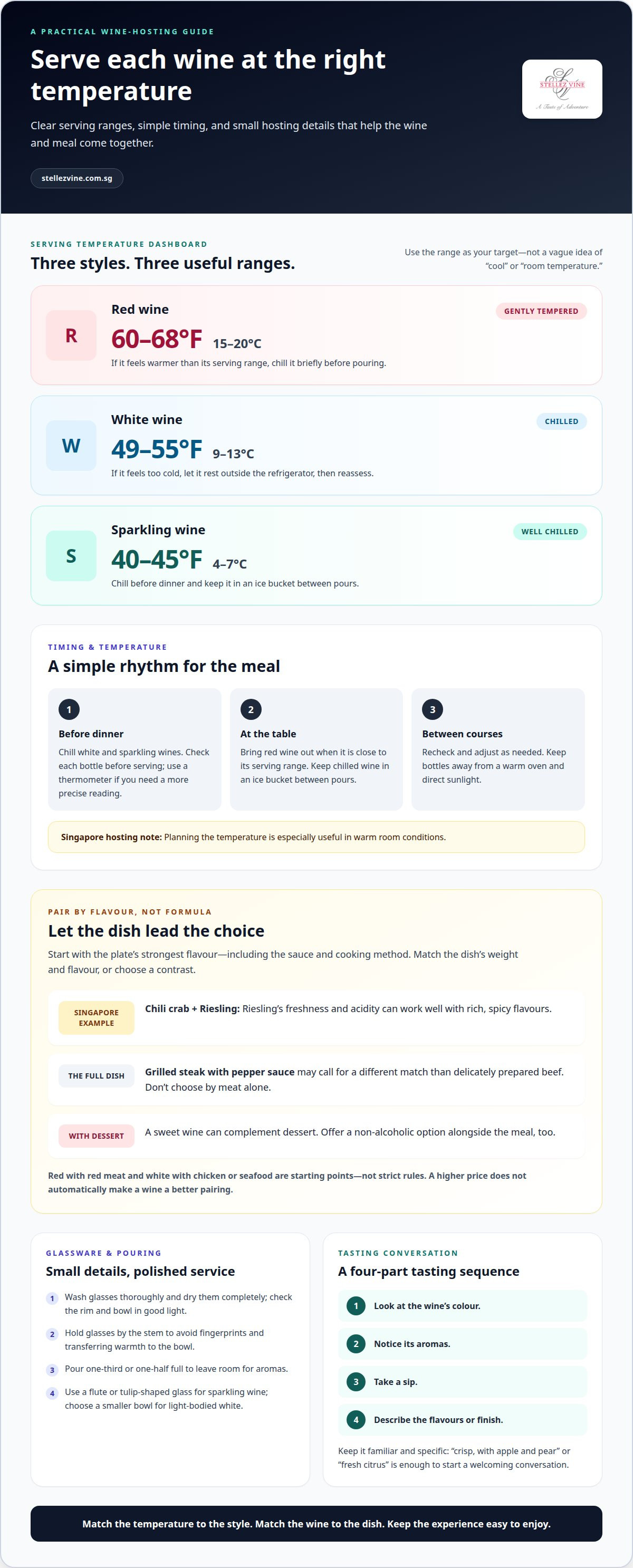
Temperature shapes how each wine’s aromas and flavours reach the glass. Serve red wine at 60-68°F (15-20°C), white wine at 49-55°F (9-13°C), and sparkling wine at 40-45°F (4-7°C). These ranges give you a useful target for setting out bottles, rather than relying on a vague idea of “cool” or “room temperature.”
In Singapore, room conditions make temperature planning especially useful. Check each bottle before serving, and use a thermometer if you need a more precise reading. If a red feels warmer than its serving range, chill it briefly before pouring. If a white or sparkling wine feels too cold, let it rest outside the refrigerator, then reassess before serving.
Plan the timing as well as the temperature. Chill white and sparkling wines before dinner, and keep sparkling wine in an ice bucket between pours. Bring red wine to the table when it is close to its serving range. Don’t leave an open bottle beside a warm oven or in direct sunlight, where its temperature can rise during the meal.
If guests prefer sparkling, sweet or non-alcoholic drinks, offer a choice alongside the meal. Serve sparkling wine within its recommended range, pair sweet wine with dessert, and provide a non-alcoholic option for anyone who doesn’t want alcohol. A clearly presented choice helps every guest take part comfortably.
Keep the temperature in mind throughout the meal, not just for the first glass. An ice bucket helps maintain chilled wine during dinner, while a quick temperature check can guide adjustments between courses. If you’re serving red and white, keep the bottles separate and bring each out when it suits the meal. Moving from a fresh white to a more gently tempered red can make the transition from seafood to a richer main feel deliberate. Match serving temperature to the style and let the wine’s character lead.
4. Sharing wine-tasting impressions
Good tasting notes describe what you actually notice, not what you think you’re supposed to find. Start with one clear observation about the aroma, flavour or texture. For example, describe Pinot Grigio as crisp, with apple and pear notes. Specific, familiar words give guests an easy way into the conversation.
Build a simple tasting sequence around the glass. First, look at the wine’s colour. Then notice its aromas, take a sip and describe the flavours or finish. Specialist language isn’t necessary: “fresh citrus” or “soft red fruit” can feel more welcoming than a string of technical terms. This makes impressing guests with your wine choice feel like sharing, not performing.
Use grape varieties as helpful reference points, not rigid tasting scripts. Sauvignon Blanc is often described with citrus and herbaceous flavours; Riesling with lime, citrus and tropical fruit. Chardonnay can suggest apple, pear, tropical fruit, vanilla or butter. These examples help you explain what you notice while leaving room for guests to experience the wine differently.
For reds, Pinot Noir can offer light red fruit, such as strawberry, cranberry and raspberry, alongside earthy notes like mushroom or cedar. Merlot can bring cherry, black fruit and vanilla to mind, while Syrah is associated with peppery spice, blueberry and black fruit. Choose one or two descriptors that genuinely fit the glass rather than reciting every possible note.
Invite others into the conversation with an open prompt, such as “What stands out to you?” A guest might notice citrus in Sauvignon Blanc while you focus on its herbal character. Welcome both impressions, and don’t present personal preference as a verdict on quality. If someone dislikes a wine, ask what style they prefer. That conversation can guide a more personal choice next time, making impressing guests with your wine choice about thoughtfulness rather than expertise.
To develop your tasting vocabulary, explore wines with distinct grape and flavour profiles. Compare a bright white with a fruit-forward red, then describe each using aroma, flavour and texture. This simple approach turns tasting into a shared discovery, not a test of expertise.
Stellez Vine Singapore
Stellez Vine Singapore brings thoughtful wine choices and quality storage options together for your hosting plans. Explore South African Wines and Savage wines when choosing bottles for a dinner menu, a celebration or a new tasting discovery.
For regular entertaining, the right storage can keep bottles organised and ready for future occasions. Explore Kadeka Wine Chillers, Eurocave Wine Fridges and LIEBHErr Wine Cabinets for your collection. Combine a carefully chosen bottle with considered glassware and confident serving, and the details of your evening feel cohesive from the first pour to the final toast.
Contact Stellez Vine Singapore to discuss wine choices and storage options for your home entertaining.
Make Your Next Gathering Your Own
Memorable wine moments often begin with a personal choice: a bottle that reflects the menu, the mood or a region you’re curious to explore. Let each gathering inspire your next discovery. A new producer or grape gives guests something fresh to discuss, while thoughtful storage keeps bottles ready for future occasions. Impressing guests with your wine choice is less about following rules and more about creating an experience that feels considered and distinctly yours.
Explore South African Wines for a distinctive addition to your table, and consider Kadeka Wine Chillers or Eurocave Wine Fridges for storing bottles at home. These choices support a more deliberate approach to entertaining, from selecting a wine to building a collection over time.
Contact Stellez Vine Singapore for wine advice and take the next step toward hosting with confidence.
Frequently Asked Questions
How do I choose wine to match a dinner menu?
Choose wine by the dish’s strongest flavour, sauce and richness, then take your guests’ preferences into account. For a varied menu, select a versatile bottle for the main course and offer another style for guests with different tastes. A creamy sauce, for example, can benefit from a fresh wine that balances its richness. Ask about dietary preferences before finalising the menu so your choices suit everyone at the table.
Where can I buy impressive wines in Singapore, and what do they cost?
Stellez Vine Singapore offers wines from South Africa, Thailand, Italy, France, Argentina and other regions, with orders available online or offline. Prices vary by bottle, so review individual product listings for current SGD prices rather than assuming every wine costs the same. Choose a style that suits your menu and occasion, then compare the available bottles with your budget.
What wine serving temperature and glassware should I use?
Serve red wine at 60-68°F (15-20°C), white wine at 49-55°F (9-13°C), and sparkling wine at 40-45°F (4-7°C). Select a glass suited to the style, such as one designed for sparkling wine, light-bodied white or fortified sweet wine. For a tasting, set out clean, dry glasses before guests arrive, so each wine can be enjoyed without lingering residue or aromas.
How can I read a wine label and judge quality quickly?
Consider the producer, vintage and style: the grape or region alone doesn’t guarantee quality, and a higher price doesn’t automatically make a wine a better choice. Select a bottle whose character suits the meal and occasion.
How should I decant and serve wine to guests?
If a wine doesn’t require decanting, open the bottle and pour directly; swirling it in the glass can aerate the wine. Serve it at a temperature suited to its style, hold the glass by its stem and pour one-third to one-half full.

Comments