
Food Friendly Red Wines for Singapore Meals and Spicy Food

Big reds aren’t always the best match for Singapore’s lively, chilli-rich meals. Food friendly red wines often bring fresh acidity, generous fruit and softer tannins, complementing shared dishes without amplifying heat or overwhelming savoury flavours. A fruit-forward red served slightly chilled can be more comfortable with spice than a powerful, high-alcohol style.
Choosing a bottle for a table of different dishes can feel like a balancing act: one wine may need to work with grilled meats, vegetables and rich sauces. Look beyond grape names and consider how acidity refreshes the palate, how tannin meets protein, and how body and fruit shape each pairing.
Explore practical red wine pairings for spicy Singapore meals, lighter fare and savoury favourites, with clear guidance on when to reach for a brighter, lighter style and when a fuller red makes sense. You’ll have a simple framework for choosing a wine that lets the food, and the company, shine.
Table of Contents
1. Versatile reds for Singapore shared meals and spicy dishes
These styles offer a useful guide to food friendly red wines, especially when a shared table brings several flavours together. For chilli-rich dishes, choose bright fruit and moderate structure over a powerful, high-alcohol red.
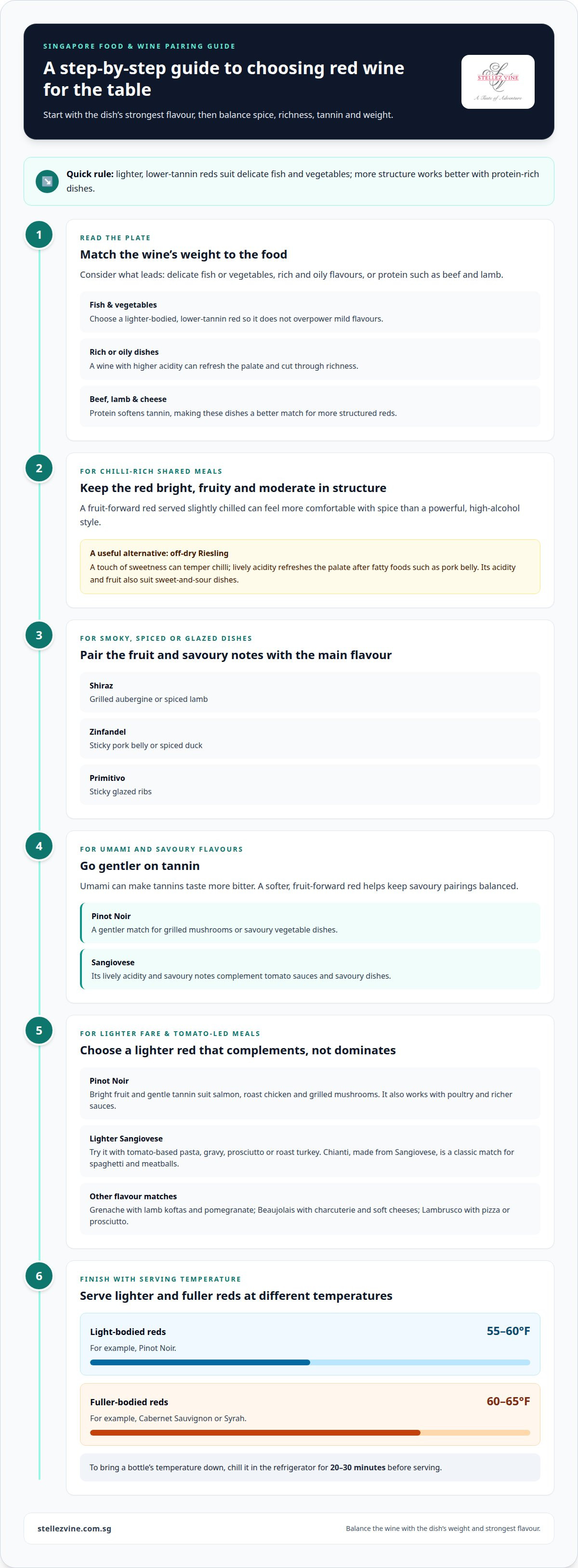
Match the wine’s character to the dominant dish. Shiraz suits grilled aubergine and spiced lamb, where ripe fruit meets smoky, earthy flavours—a pairing principle frequently embraced by contemporary spice-led spots like Phulkari Indian Balgowlah. Zinfandel works with sticky pork belly or spiced duck, while Primitivo complements sticky glazed ribs. For Singapore’s chilli heat, serve a fruit-forward red lightly chilled. Its cool, juicy profile generally feels more pleasant than a bold, high-alcohol wine.
Off-dry Riesling is a useful alternative when a meal moves between spicy, sweet and savoury flavours. A touch of sweetness can temper chilli, while lively acidity refreshes the palate after fatty foods such as pork belly. Riesling also pairs well with sweet-and-sour dishes: its acidity meets the tang, and its fruit complements the sweetness. Pour it alongside dishes with chilli, rich sauces or contrasting sweet notes.
Red isn’t the only option for spicy or sweet dishes. Aromatic white wines bring expressive fruit and fragrance without overpowering assertive seasoning. Off-dry Riesling is especially versatile with chilli and sweet-sour sauces; a drier, aromatic white can suit fragrant dishes that don’t need sweetness. Choose according to the sauce and strongest flavour, not just the main ingredient. This keeps each glass in step with a varied table.
2. Acidity and tannin in food-friendly wines
Acidity and tannin shape how a red wine pairs with food. Higher acidity refreshes the palate, making a bright, fruity wine a natural match for rich or oily dishes. Sangiovese, the grape behind Chianti, often has lively acidity and savoury notes such as black olive and sundried tomato. These flavours can complement tomato sauces and savoury dishes without making the wine feel heavy. Pinot Noir offers another versatile profile, with a lighter body and lower tannin.
Tannin creates a drying sensation, particularly alongside food with little protein. Protein softens that impression, which is why more tannic reds suit beef, lamb and cheese. Cabernet Sauvignon and Syrah can stand up to these rich foods, while a highly structured red may feel harsh with delicate fish or vegetables. For umami-rich dishes, choose a relatively low-tannin red. Umami can make tannins taste more bitter, so a softer, fruit-forward style helps keep the pairing balanced.
Use the plate as your guide: match higher tannin with protein, and let acidity cut through richness. A rare steak can pair with structured Cabernet Sauvignon; grilled mushrooms or a savoury vegetable dish may suit Pinot Noir better. If a sauce tastes especially savoury, choose a less tannic bottle rather than relying on the grape name alone. This distinction makes food-friendly red wines easier to select for mixed menus.
In Singapore, serve light-bodied reds such as Pinot Noir at around 55 to 60°F, and fuller-bodied Cabernet Sauvignon or Syrah at around 60 to 65°F. Chilling a bottle in the refrigerator for 20 to 30 minutes before serving can help bring the temperature down. Pour into a red wine glass with enough room to swirl, allowing the wine’s aromas to emerge. For a considered table setting, red wine glassware complements a meal built around acidity, tannin and savoury flavours.
3. Light-bodied fruity reds with lighter fare and richer savoury dishes
A lighter red can accompany dishes that make Cabernet Sauvignon feel too assertive. Pinot Noir’s bright fruit and gentle tannin suit salmon, roast chicken and grilled mushrooms, complementing savoury flavours without masking them. Serve it slightly chilled with a shared spread, especially when the table includes poultry and richer sauces. The wine won’t dominate, leaving room for each bite to shine.
For tomato-led meals, try a lighter Sangiovese with pasta, gravy, prosciutto or roast turkey. Its acidity meets the tang of tomato sauce, while savoury notes can echo herbs and cured meat. Chianti, made from Sangiovese, is a classic match for spaghetti and meatballs—a pairing seen across traditional menus like Valentino's Italian Restaurant. Choose a lighter style for delicate sauces; richer, more structured bottles suit heartier meat dishes.
Pinot Noir, Grenache and Beaujolais each bring a different strength to food pairing. Pinot Noir is a flexible choice for salmon, chicken or beef, thanks to its lighter body and low tannin. Grenache’s ripe fruit complements lamb koftas and pomegranate. Beaujolais, made primarily from Gamay, offers a lively match for charcuterie and soft cheeses. Match the wine’s weight to the dish, then consider whether its fruit or savoury notes will complement the sauce.
For other lighter plates, Gamay can accompany cured meats, while Merlot works with grilled pork chops and root vegetables. Lambrusco brings a lively contrast to pizza or prosciutto. These pairings show why fruity reds can work with delicate and deeply savoury foods alike. Sauvignon Blanc, by contrast, is a white option for aromatic dishes that call for freshness rather than red-wine structure. Save Cabernet Sauvignon for bolder, meat-rich plates, and choose lighter styles when fish, chicken or vegetables lead.
4. What red wine pairs well with seafood, chicken, and vegetarian dishes?
Choose a lower-tannin red for delicate proteins, as firm tannins can overpower mild flavours. Pinot Noir is a flexible choice for salmon, poultry and lean beef. Its lighter structure lets grilled salmon remain the focus, while its fruit complements the fish’s savoury richness. With chicken, match the wine to the preparation: lighter Pinot Noir suits simply cooked poultry, while richer sauces can support a more substantial red.
Vegetarian dishes offer equally inviting pairings. Zweigelt can accompany lentil shepherd’s pie, where its fruit meets the earthy lentils. Cabernet Franc suits lentil curry or falafel wraps, bringing enough character for spiced vegetables and legumes. For a fresher plate, pair Frappato with roasted red pepper and feta salad. The wine’s fruit complements the pepper, while salty cheese adds savoury depth.
Let the sauce guide your final choice. Barbera pairs well with tomato bruschetta or baked ziti, as its lively acidity works alongside tomato’s tang. With grilled mushrooms, Pinot Noir offers a softer match than heavily tannic Cabernet Sauvignon. For fish, keep the red light and fruity; for lentils or roasted vegetables, choose a wine with enough flavour to meet their earthiness. These distinctions help red wine feel at home across a mixed menu.
Build a shared meal around a small set of complementary pairings: Pinot Noir with salmon or chicken, Cabernet Franc with lentil curry, and Barbera with tomato-led dishes. Then choose one versatile bottle based on the meal’s strongest sauce or seasoning. Explore red wines for varied meals and find a bottle to suit seafood, poultry or a vegetarian centrepiece.
Stellez Vine Singapore
Stellez Vine Singapore offers a curated range of wines for exploring styles to pair with meals, from shared spicy dishes to lighter seafood and savoury vegetarian plates. When choosing a bottle, consider acidity, tannin, body and fruit, then match them to the strongest flavours on the table. South African wines are one way to discover different red wine styles.
For serving and storage, Kadeka Wine Chillers, Eurocave Wine Fridges and LIEBHErr Wine Cabinets provide options for keeping wine at home. Explore these alongside your wine selection when you want your bottles stored with care between meals.
Contact Stellez Vine Singapore to discuss your food pairing and wine selection.
Make the Next Meal Your Pairing Guide
Let the menu shape your next discovery. Choose the dish you most want to savour, then select a bottle that complements its sauce, seasoning and texture. This makes choosing food friendly red wines less about following a fixed rule and more about creating a considered experience around the table.
For a shared meal, think about the flavours that will linger longest, whether they come from a chilli-rich sauce, roasted vegetables or a savoury main. Use that detail to guide your next selection, and keep exploring styles that bring freshness, fruit and balance to Singapore dining.
Ready to find a bottle for your next meal? Contact Stellez Vine Singapore to explore your options. Enjoy the discovery, and make your next pairing a pleasure to share.
Frequently Asked Questions
What makes a red wine food-friendly?
A red wine is food-friendly when its flavour and structure complement a meal rather than overwhelm it. For dinner with several courses, consider the strongest sauce or seasoning, not just the main ingredient. A bright, moderate-bodied wine can move from roast chicken to tomato-based pasta, while a more structured bottle is better suited to a substantial meat course.
Which light-bodied red wines pair well with a variety of foods?
Pinot Noir, Gamay and Grenache are useful options, each with a distinct strength. Choose Pinot Noir for a menu spanning poultry and seafood; try Gamay with charcuterie or soft cheeses. Grenache suits lamb koftas with pomegranate. For a varied dinner, serve one with the course that most closely matches its flavours, rather than expecting a single bottle to suit every plate equally.
Which red wines pair well with spicy Singaporean food?
Choose a fruity red with restrained tannin for chilli-led dishes. Lightly chilled Pinot Noir can suit a shared table where heat is present but not dominant. If a dish combines chilli with a sweet glaze, look for ripe fruit rather than a heavily structured style. For especially fiery food, off-dry Riesling is a useful non-red alternative, as sweetness can soften the chilli’s impact.
Which red wines pair well with rich or fatty foods?
For rich meat dishes, select a red with enough acidity or structure to keep the pairing balanced. Cabernet Sauvignon can stand up to ribeye steak or aged cheddar, while fruit-forward Malbec complements barbecue ribs. Consider the sauce too: a sharp tomato dressing calls for freshness, while a creamy or buttery preparation can support a fuller-bodied wine.
How can I choose a versatile red wine for a dinner party?
First, identify the meal’s most prominent ingredient and sauce. Next, consider whether guests will encounter heat, sweetness or richness across several dishes. Then choose a balanced red with moderate body, and serve it with the course it suits best. If the menu combines seafood, vegetables and meat, offer a second style rather than expecting one bottle to cover every pairing.



Comments