
4 Things to Know About How Long Open Wine Lasts

Oxygen, not an unfinished glass, is what starts an opened wine’s decline. If you’re wondering how long you can keep an open bottle of wine, most still wines stay at their best for 3 to 5 days when resealed and refrigerated. Their flavours and aromas can fade as oxidation changes the wine.
That shift from fresh and expressive to muted doesn’t follow the same clock for every bottle. The wine’s style, how much remains and how you store it all affect freshness. A little care can make the difference between an enjoyable second pour and a disappointing one.
Learn why opened wine loses freshness, how storage and smaller containers can slow the change, and why sparkling wine has a shorter window for keeping its fizz. These practical cues can help you decide when to pour, preserve or move on to another bottle.
Table of Contents
1. How long does wine last once opened?
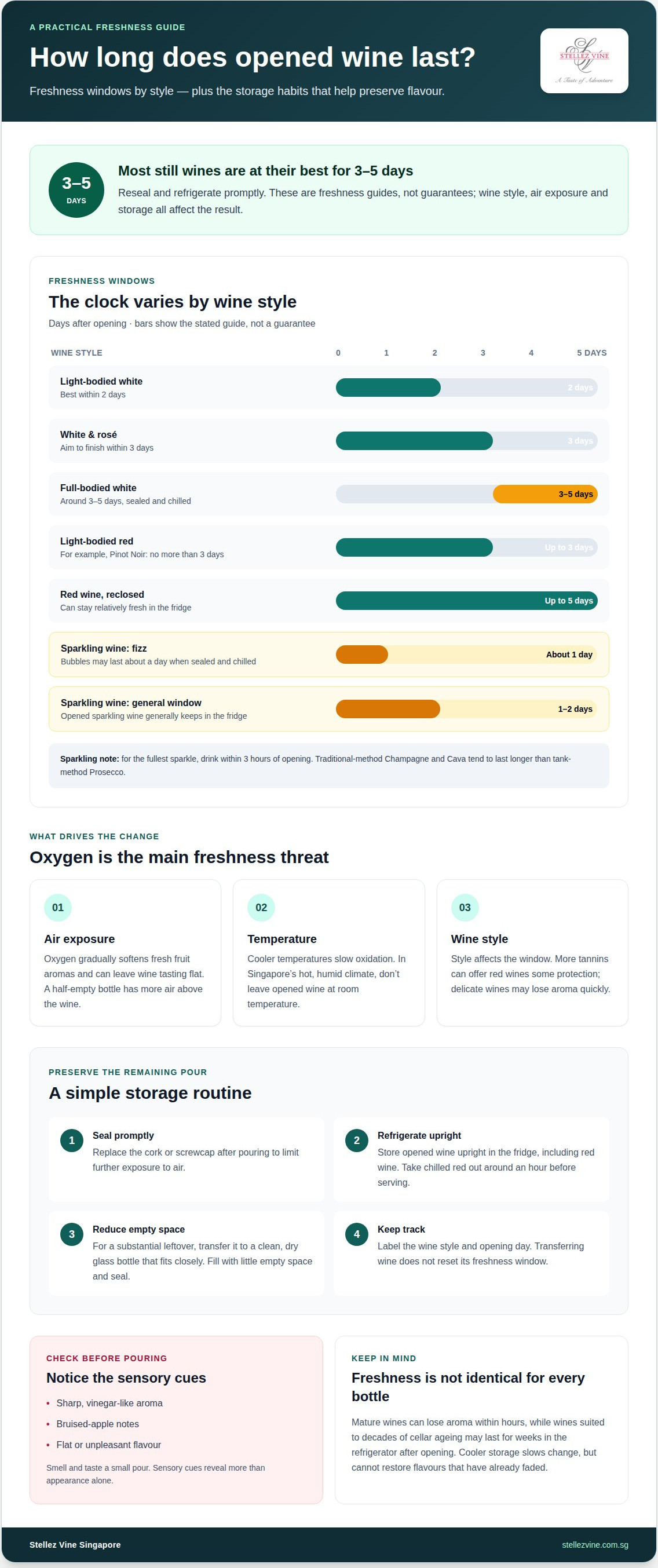
How long can you keep an open bottle of wine? Most wines stay at their best for 3 to 5 days when resealed and refrigerated. The answer depends on the wine’s style, storage and exposure to air. Cooler temperatures slow oxidation, but they can’t restore flavours that have already faded.
For white and rosé, refrigerate the recorked bottle and aim to finish it within 3 days. Light-bodied whites are best within 2 days, while full-bodied whites can keep their quality for around 3 to 5 days when sealed and chilled. By the third day, an aromatic white may already taste less expressive.
Red wine also benefits from refrigeration after opening, even if you usually serve it warmer. Once reclosed, it can stay relatively fresh in the fridge for up to five days. Light-bodied reds such as Pinot Noir may last no more than three days. Take chilled red wine out around an hour before serving so it can warm up.
Sparkling wine has a shorter window because its bubbles escape after opening. Seal the bottle and refrigerate it; expect the fizz to last about a day, while opened sparkling wine generally keeps for one or two days. For sparkling wine, ask: “How long can you keep an open bottle of wine and retain its fizz?” Traditional-method Champagne and Cava tend to last longer than tank-method Prosecco.
In Singapore’s hot, humid climate, don’t store opened wine at room temperature. Reseal and refrigerate it promptly, as warmth speeds changes that dull aroma and flavour. Store the bottle upright, whether it has a cork or screwcap, to reduce the wine’s exposure to oxygen.
These are freshness guides, not guarantees that every bottle will taste the same for the same length of time. Mature wines can lose aroma within hours, while wines suited to decades of cellar ageing may last for weeks in the refrigerator after opening. Smell and taste the wine before pouring, especially if it has been open beyond its usual window.
2. Decanting leftovers into smaller containers
A half-empty bottle leaves a large pocket of air above the wine. Transfer the leftover wine to a smaller, clean bottle to reduce that air space. Less air means less oxygen in contact with the wine, helping slow the changes that dull its aroma and flavour.
Choose a clean glass container with a secure cap that suits the amount of wine left. For example, if a standard bottle is nearly half full, a smaller bottle filled close to its neck leaves less headspace. Avoid containers that hold far more than the leftover wine. The goal is a close fit, not simply another vessel.
Keep the transfer simple. Make sure the smaller bottle is clean and dry, then pour carefully to limit splashing and avoid mixing extra air into the wine. Fill it to leave little empty space and seal it promptly. Store it upright in the refrigerator. If wine remains in the original bottle, close that separately.
Choose a container that won’t affect the wine’s character. Glass is practical because it’s easy to clean and won’t add aromas that compete with delicate notes. A clean screw-cap bottle can work well. Avoid containers that held strongly scented food, as lingering smells may transfer to the wine.
Label the smaller bottle with the wine style and the day it was opened. This helps distinguish a crisp white from a light red when both are chilled, and keeps the original opening date clear. Transferring wine doesn’t reset its freshness window, so judge it by its aroma and taste, not the new container alone.
Smaller containers are most useful when a bottle has a substantial amount left and won’t be finished soon. They don’t remove oxygen already dissolved in the wine or reverse oxidation. Combine the transfer with prompt refrigeration to protect the remaining pour, especially for delicate wines whose subtle fruit and floral notes can fade quickly.
3. Oxygen and wine spoilage
Oxygen starts changing wine as soon as the bottle is opened. This process, called oxidation, gradually softens fresh fruit aromas and can leave the wine tasting flat. A bright, crisp white may lose its citrus character, while a red’s lively fruit can become muted and less defined.
The amount of air matters. A bottle with only a small pour left has more empty space above the wine, exposing it to more oxygen. Wines with more tannins, the drying compounds found in red wines such as Cabernet Sauvignon, tend to last longer after opening because tannins offer some protection against oxygen.
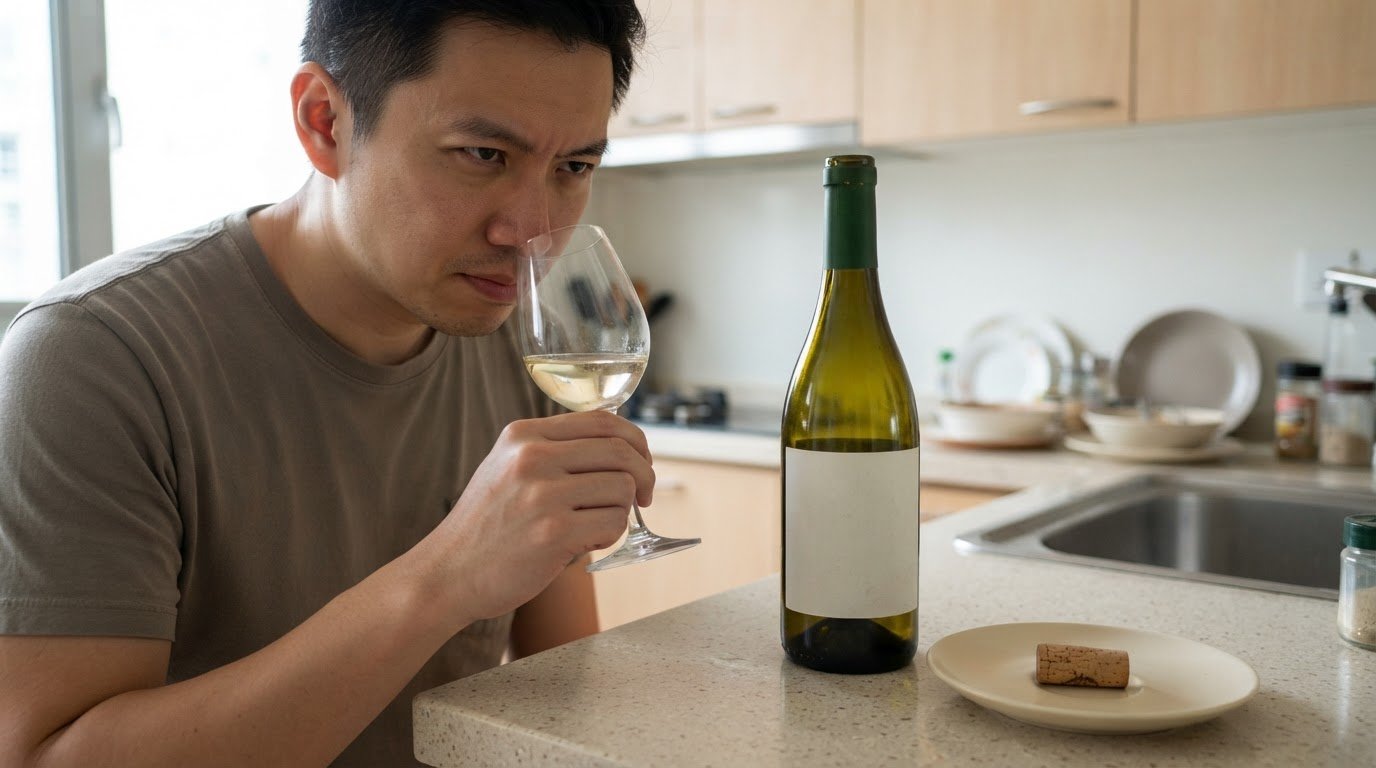
To check whether opened wine has gone bad, smell and taste a small pour. A sharp, vinegar-like aroma, bruised-apple notes or a flat, unpleasant flavour can signal that oxidation has overtaken the wine’s character. Compare it with the wine’s usual profile, such as fresh berry notes in a young red or citrus in a white.
Vacuum wine pumps may not do much to preserve wine over time. They also can’t reverse oxidation that has already changed the wine. A sound seal helps limit further exposure, but the wine’s condition depends on how much air it has encountered and how long it has been open.
After pouring, replace the cork or screwcap promptly, keep the bottle upright and refrigerate it. Cooler temperatures slow chemical processes, including oxidation, giving the wine more time to retain its aroma and flavour. Avoid leaving an opened bottle uncorked on the dining table between pours.
Judge the wine by its sensory cues, not its appearance alone. A slight colour change may accompany oxidation, but smell and taste reveal more about its condition. If a familiar Sauvignon Blanc smells sharply of vinegar or tastes markedly flat, its best drinking moment has passed.
4. Sparkling wine and fizz retention
Once opened, sparkling wine loses carbon dioxide, the gas that creates its lively bubbles. Pouring and warm exposure speed that loss, so preserve the fizz by sealing the bottle promptly and chilling it. For the fullest sparkle, drink it within 3 hours of opening.
A sealed, refrigerated bottle may retain bubbles for about a day. Opened sparkling wine generally keeps for one or two days in the fridge, though its texture can become noticeably less lively before it tastes spoiled. Treat freshness and fizz as separate measures: wine may remain drinkable after its signature sparkle fades.
The method used to make sparkling wine affects how it holds up. Traditional-method wines, including Champagne and Cava, tend to last longer after opening than tank-method wines such as Prosecco. Prosecco’s bubbles are more delicate, so it tends to lose its sparkle sooner. Chilling and sealing help slow carbon dioxide from escaping, whatever the style.
Use a sparkling-wine stopper designed to secure the bottle’s neck, then refrigerate the bottle. A Champagne stopper can keep sparkling wine bubbly for up to five days. That’s a possible fizz-retention window, not a promise of peak flavour. For the best experience, follow the shorter drinking window.
Plastic wrap may hold some fizz for up to 3 days, but the wine can still taste flat. A teaspoon placed in the bottle’s neck doesn’t preserve sparkling wine. Avoid vacuum pumps, too: they remove bubbles rather than protect them. A tight-fitting stopper is the more suitable choice for keeping carbonation in the bottle.
For a gathering in Singapore, open only what you plan to serve, then stopper and refrigerate the remainder immediately. If the next pour has lost its sparkle, use the wine in a dish where softened fizz matters less. For a celebratory glass, choose a freshly opened bottle and savour its crisp, lively mousse.
Stellez Vine Singapore
Stellez Vine brings together a curated wine selection and wine storage options. If opened bottles regularly lose freshness at home, a wine fridge or cabinet can help you maintain more consistent storage for your collection. Explore Kadeka Wine Chillers, Eurocave Wine Fridges and Liebherr Wine Cabinets.
Explore South African wines and choose a bottle suited to the occasion, whether you’re opening it for dinner or saving it for later. Good storage supports unopened bottles; once opened, resealing and refrigeration remain essential for preserving freshness.
For wine selections or storage options, contact Stellez Vine Singapore.
Make the Next Pour Count
Knowing how long you can keep an open bottle of wine can shape your plans for a gathering, not just how you store leftovers. Choose a bottle with the occasion in mind: a shared dinner, a quiet evening or a glass alongside a meal. If you expect to pour slowly, consider who will enjoy the rest and when, so opening a bottle feels deliberate.
Let that approach guide what you explore next. The style you choose, the pace of your gathering and your home storage setup all shape the experience from first pour to final glass. Think about which wines suit your usual occasions and how you like to serve them. A thoughtful choice can make each bottle more rewarding, whether you’re sharing it with guests or savouring it at home.
For ideas on wine selections and storage options that suit your habits, contact Stellez Vine Singapore. Make your next bottle part of an occasion you’ll look forward to.
Frequently Asked Questions
Why does wine go bad?
Wine changes because oxygen reacts with its compounds after the bottle is opened. Over time, fresh fruit and floral aromas can fade, leaving muted flavours or sharp, vinegar-like notes. Warm storage speeds these changes, while wine with more tannin may resist them longer. A bottle can lose its appealing character without becoming unsafe solely because its taste has changed.
How long does wine last once opened?
Most opened still wines are best within 3 to 5 days when sealed and refrigerated. Style matters: delicate light-bodied wines can lose their character sooner, while fortified Port and Sherry can remain enjoyable longer. For example, plan to serve a crisp white earlier than a fortified wine. Use aroma and taste as practical cues, since storage and the wine’s condition affect freshness.
Can you stop wine from deteriorating or ‘going bad’?
You can slow deterioration, but not stop it completely or reverse changes that have already occurred. Reseal the bottle promptly, refrigerate it and transfer a small leftover portion to a clean container that fits closely. This reduces further oxygen exposure. Vacuum pumps make little difference over time and aren’t suitable for sparkling wine because they remove its bubbles.
How long does a bottle of wine last after opening?
For a typical still wine, use 3 to 5 days as a practical freshness window after opening and resealing. That’s a guide to quality, not a single deadline for every bottle. A delicate wine may become muted sooner; a fortified style can last longer. Note the opening day, then judge the remaining wine by its aroma and flavour before serving.
Which wines last the longest?
Fortified wines such as Port and Sherry generally last longer after opening because fortification raises their alcohol content. Resealed in a cool, dark place, opened fortified wines can remain enjoyable for up to 28 days. Ruby Port may keep for 4 to 6 weeks, while Tawny Port can last up to 3 months. These styles suit slow, occasional pours better than delicate wines.
How long does opened red wine last in the fridge?
A resealed red can stay relatively fresh in the refrigerator for up to five days. For a lighter red such as Pinot Noir, aim to finish it within three days, as its delicate character can fade sooner. Keep the bottle upright and sealed between pours. Before serving, let chilled red wine warm for about an hour so its aromas show more clearly.
Comments